Glen Mhor Hotel at Uile-bheist 'Brewstillery'
Inverness - Ness Bank
Book now
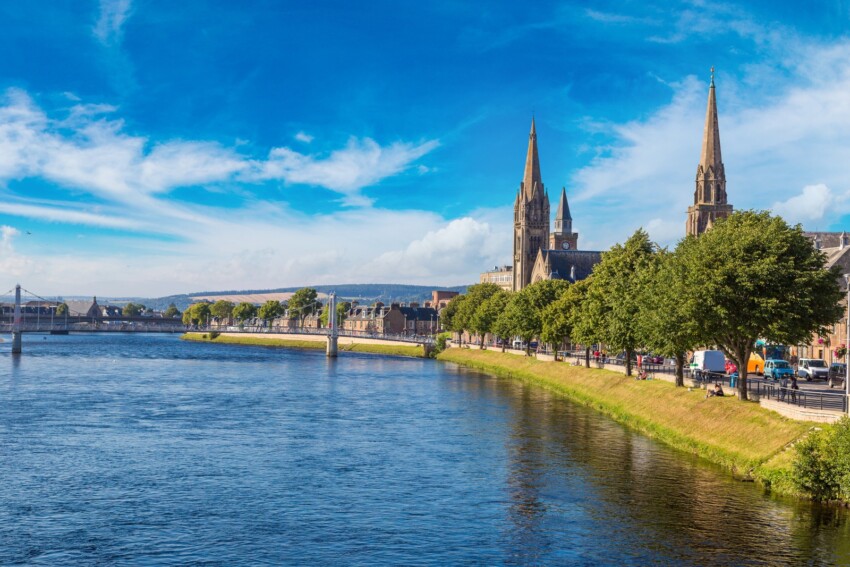
But whilst staying in Inverness, you’ll also discover a stunning castle dominating the town from above, an imposing neo-Gothic cathedral, and a town with excellent quality of life and brimming with energy and vitality. Indeed, by some estimates it’s one of Europe’s fastest-growing towns by population: a quarter of the Highlands‘ population lives here.
Inverness is, all things considered, a small town and the historic centre is perfectly walkable. Situated between the two banks of the River Ness, which flows into the loch of the same name just a few kilometres away, it enjoys an enviable position. Here are the most interesting things to see, in the centre and surroundings.
Perhaps the most important site to visit in Inverness is its castle, called Caisteal Inbhir Nis in Scottish Gaelic. Built in red sandstone, it stands in a dominant position yet still in the town centre, overlooking the river from a small hillock. Inverness Castle has been there since 1057, although the present structure has been entirely rebuilt and modified over the centuries, dating only to 1836. Its importance in Scottish culture is such that it appears on the reverse of the £50 note introduced in 2005 and issued by Scotland’s national bank.
In front of the castle stands a bronze statue of Flora Macdonald, a Scottish woman who helped Charles Edward Stuart evade government troops after the Battle of Culloden.
Inverness’s cathedral is dedicated to St Andrew, and stands on the opposite bank of the River Ness from the castle. Like many of the town’s buildings, it also dates to the nineteenth century. Built in neo-Gothic style, it’s worth visiting both outside and in, where three naves are divided by substantial columns of red marble and Gothic arches. The coffered ceiling is particularly noteworthy, as it too follows the form of a Gothic arch.
Inverness’s Town House is housed in a beautiful building resembling a castle, constructed in Gothic style in 1882 to designs by architect William Lawrie. It’s located along High Street, right in the town centre a short walk from the castle. Ordinarily the Town House is not open to the public, though as a municipal building, residents can access it for standard purposes, including weddings.
The Inverness Museum and Art Gallery, or InvMAG, is a well-known town museum allowing visitors to discover the history and culture of the town and the Highlands in general. Inside are displayed artefacts and collections from this magical region, divided into galleries devoted to permanent and temporary exhibitions, alternating between local artists and craftspeople.
The museum’s opening hours vary by season and are never particularly extensive: we’d recommend checking in advance. However, it’s rather small and a visit shouldn’t take more than an hour. At the end of your tour you’ll find a café and a shop selling precious souvenirs. Entry is free, though donations are welcome.
For lovers of shopping and traditional markets, the Victorian Market is a must-visit during a trip to Inverness. It’s practically opposite the main train station, along Academy Street, and is housed within a historic nineteenth-century building, with ornate ironwork details and a beautiful wooden domed roof. Inside you’ll find over 30 shops, perfect for purchasing a gift or souvenir, plus bars, restaurants, cafés, two hairdressers, a tailor and a cobbler – trades from another era, much like the atmosphere inside the market. Everything is divided into three distinct areas called Market Hall, Market Arcade and Queensgate Arcade.
The Victorian Market opens daily from 8:00 in the morning, closing at 18:00 on Sunday, Monday, Tuesday and Wednesday, with extended hours until 20:00 on Thursday, Friday and Saturday. Note that individual shops may vary their opening times.
Firth is the Gaelic word for a fjord. The Moray Firth, which extends north-east of Inverness and opens to the North Sea, is thus one of the destinations not to be missed if you’re in the area, especially if you have a hire car. The fjord can be visited on the south shore, where you’ll find a golf course, the fishing village of Ardersier and Fort George, or on the north shore, where the villages of Avoch and Fortrose and Chanonry Point lighthouse are located.
The Moray Firth can also be explored via a boat trip departing from Inverness, during which – with a bit of luck, once you’ve crossed the large Kessock Bridge – you may see dolphins, sea lions and seals swimming.
The Great Glen Way is a walking route stretching 118 kilometres from coast to coast through the Highlands. It either starts or finishes (depending on which direction you choose) at the town of Inverness. The route is long and obviously not completed in a day, but it’s very easy and could be an interesting alternative for an original trip to Scotland.
In the following map you can see the location of the main places of interest mentioned in this article.
Inverness is truly small and easy to navigate on foot. We’d still recommend staying in the centre, that is, the area between the station and the castle, so you have everything within reach including shops, bars, pubs and restaurants. Even if you choose accommodation further out, it’s no problem – you’ll never be far from the main attractions. Do consider the practicality of your accommodation: if travelling by car, make sure there’s parking nearby, whilst if travelling by train – especially with luggage – look for somewhere close to the station.
Accommodation types in Inverness vary, but are mostly guest houses, apartments and bed and breakfasts, very common in this part of the United Kingdom. If you’re looking for a hotel, the choice isn’t vast but it’s definitely good: right opposite the station you’ll find the 3-star Royal Highland Hotel, whilst along the River Ness are the River Ness, part of the Radisson group, and the magnificent Inverness Palace Hotel & Spa of the Best Western group.
Inverness is served by a small airport located east of the town, which mainly connects it to three of the six London airports (specifically Gatwick, Heathrow and Luton). There are very few international connections, a handful of domestic flights operated by Scottish airline Loganair and a couple of charters to some holiday destinations.
But your Inverness visit will likely be part of a tour or road trip through Scotland, making it far more probable you’ll arrive by train or car. Travelling by train, Inverness station is practically in the town centre: Scotrail trains connect it to Edinburgh, Aberdeen, Glasgow, Wick and Elgin, so it’s very easy to reach from anywhere.
If you have a hire car, Inverness is on the A9 motorway, which also passes through Edinburgh and Stirling. It’s a 3-hour drive from Edinburgh, just under 3 hours from Stirling. From Glasgow it also takes about 3 hours, exiting the city via the M80 to Stirling, then joining the A9. The distance to cover is approximately 250–270 kilometres, depending on your starting point.
What's the weather at Inverness? Below are the temperatures and the weather forecast at Inverness for the next few days.
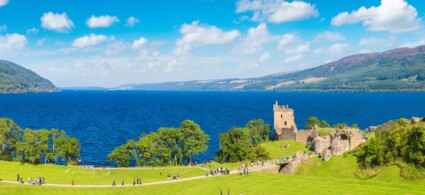
Inverness sits on Scotland's north-east coast, where the River Ness meets the Moray Firth. It serves as the gateway to Loch Ness.
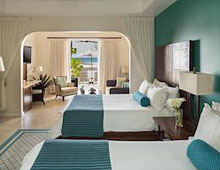 Hotel
Hotel 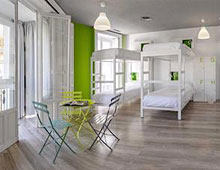 Budget accommodations
 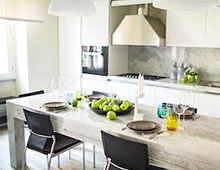 Apartments
  Family Hotel
 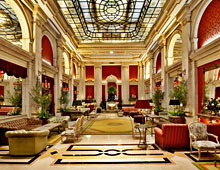 Luxury Hotel