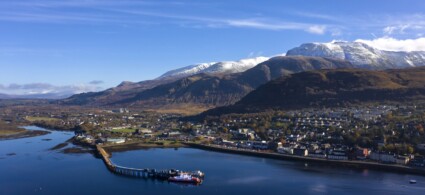
Loch Ness, thanks to its legendary monster, breathtaking scenery and the ruins of Urquhart Castle, is one of the most visited attractions throughout Scotland.
Loch Ness is one of the world’s most famous lochs, situated in the magnificent Scottish Highlands. Its deep, dark waters stretch for 37 km, making it Scotland’s second-largest loch by surface area, but the largest by volume of water thanks to its impressive depth of 230 metres.
The loch owes its worldwide fame to the legend of Nessie, the Loch Ness Monster, which has captured the public imagination since the 1930s. However, beyond the myth, the loch offers breathtaking scenery, surrounded by historic ruins and picturesque villages that absolutely deserve a visit during a tour of Scotland.
During our visit, we were struck not only by the natural beauty of the loch but also by the mysterious atmosphere that surrounds it, especially on misty days when the dark waters create a truly evocative setting.
The only drawback: the hordes of tourists that flock to the visitor centre and viewpoint areas during summer, all hoping to spot the monster or capture the perfect holiday photo by the loch.
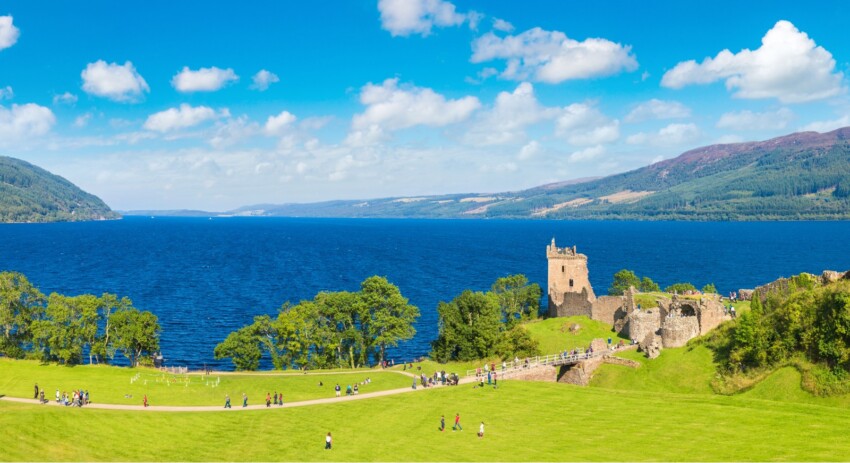
Urquhart Castle is undoubtedly the most iconic attraction on the shores of Loch Ness. This ruined medieval castle stands on a promontory overlooking the loch, offering spectacular views across the water. Built in the 13th century, the castle has a turbulent history, having been the scene of numerous battles during the Scottish Wars of Independence and the Jacobite risings.
During our visit, we explored the imposing ruins which include a five-storey tower, defensive walls and various internal buildings. The visitor centre houses a collection of artefacts discovered within the castle, including jewellery, weapons and everyday objects that tell the story of life in medieval Scotland.
The most atmospheric point is undoubtedly the main tower, from which you can enjoy a 360-degree panoramic view across the loch and surrounding hills. It’s easy to understand why this strategic site was so fiercely contested over the centuries.
Entrance isn’t cheap, but it’s well worth it both for the experience itself and for the photographic opportunities on offer. We recommend arriving early in the morning or late in the afternoon to avoid tour groups and enjoy the magical atmosphere of the place in relative peace and quiet.
Loch Ness Centre & Exhibition
The Loch Ness Centre & Exhibition at Drumnadrochit is the ideal place to learn more about the loch and its famous “inhabitant”. This modern exhibition centre tells the natural history of the loch and traces the evolution of the Nessie legend through multimedia presentations and interactive displays.
During our visit we followed a trail that explores the loch’s geology, its unique ecology and, of course, all the theories, sightings and scientific research relating to the Loch Ness Monster. The section dedicated to scientific expeditions that have used sonar and other advanced technologies to probe the depths of the loch is particularly fascinating.
The centre has recently undergone renovation and offers an engaging experience for both adults and children. It’s not necessarily aimed at believers in the monster, but presents all available information in a scientific and objective manner, leaving visitors free to form their own conclusions.
Nearby you’ll also find cafés and souvenir shops where you can purchase Nessie-themed mementos.
Loch cruises
Sailing on the waters of Loch Ness is an experience that allows you to fully appreciate the grandeur and wild beauty of the loch. During our stay, we took a cruise departing from the village of Fort Augustus that took us all the way to the ruins of Urquhart Castle.
Various companies offer boat tours of varying lengths, from short one-hour trips to longer excursions that include stops at points of interest. Many vessels are equipped with sonar that displays the underwater topography of the loch, adding an element of intrigue to the voyage, especially for those hoping to spot any anomalies in the depths!
The cruises are particularly enchanting at dawn or dusk, when the light playing on the water’s surface creates a magical atmosphere. In spring and autumn, it’s not uncommon to see mist rising from the loch, heightening the sense of mystery.
Prices for a standard cruise start from around £15-20 for adults. We recommend bringing waterproof jackets even on the finest days, as the Highlands weather can change rapidly.
The picturesque village of Fort Augustus sits at the southern tip of Loch Ness and is a must-visit for anyone exploring the area. The village takes its name from a fort built after the Jacobite rising of 1715, but today it’s best known for its Caledonian Canal lock system.
During our visit, we spent several hours watching boats navigate the five locks that connect Loch Ness to the rest of the canal. It’s a fascinating spectacle that always draws plenty of visitors. The village itself is delightful, with charming shops, traditional pubs and welcoming cafés.
We particularly enjoyed a walk along the canal to the point where it opens onto the loch, offering spectacular views across Loch Ness and the surrounding mountains. Fort Augustus is also a good starting point for hillwalking in the surrounding hills or cycling along the shores of the loch.
For those interested in local history, the Fort Augustus Abbey is worth a visit – formerly a Benedictine school and now converted into luxury apartments, though its gardens and some areas are accessible to the public.
Falls of Foyers
On the eastern shore of Loch Ness lies the spectacular Foyers waterfall, which plunges 165 feet into a rocky gorge before reaching the loch. This waterfall has inspired poets including Robert Burns and is today one of the most evocative natural attractions in the area.
During our excursion, we followed the well-maintained path that descends through lush woodland to a viewing platform offering a breathtaking vista of the waterfall. The walk is relatively short (approximately 20 minutes downhill), but steep in places, so we recommend wearing suitable footwear.
Nearby you’ll find a small but welcoming café where you can refresh yourself after your walk. The Foyers area is less crowded than other parts of Loch Ness, making it ideal for those seeking a quieter experience closer to nature.
Visiting the Falls of Foyers is free and car park fees are minimal. It’s a particularly impressive spot after rainfall, when the volume of water increases, making the spectacle even more dramatic.
Great Glen Way
For keen walkers, the Great Glen Way is an unmissable opportunity to explore the Loch Ness region on foot. This 117 km long-distance trail traverses the entire Great Glen, the geological fault line that divides the Scottish Highlands, from Fort William to Inverness.
During our stay, we walked several sections of the trail that skirt Loch Ness and were amazed by the variety of landscapes and the richness of local flora and fauna. The route alternates between forested sections and more open stretches offering panoramic views across the loch and surrounding mountains.
The Great Glen Way is well signposted and can be tackled in sections, making it suitable for walkers of varying abilities. The most convenient access points for those visiting Loch Ness are Fort Augustus, Invermoriston and Drumnadrochit.
For those wanting the full experience, it’s possible to complete the entire route in approximately 5-7 days, staying in villages along the way or in equipped campsites. We strongly recommend taking appropriate gear, including a good waterproof jacket, as Highland weather can be unpredictable even in summer.
Dores Beach
Dores Beach is a small but enchanting pebble beach situated at the northern tip of Loch Ness, just a few kilometres from Inverness. This tranquil spot offers one of the finest and most complete views across the loch.
During our visit, we spent a pleasant afternoon on this pebble beach, enjoying panoramic views that stretch the entire length of Loch Ness. On clear days, you can see all the way to Fort Augustus at the opposite end of the loch.
The beach is also home to the Dores Inn, a traditional pub where you can enjoy authentic Scottish fare and local beers with views across the loch. It was here that we met Steve Feltham, known as the full-time “Nessie hunter”, who has lived in a converted camper van on the beach since 1991, dedicating his life to the search for the Loch Ness Monster.
Dores Beach is also an excellent starting point for walks along the shore and offers exceptional photographic opportunities, particularly at sunset when golden light illuminates the loch’s waters.
How to get to Loch Ness
Loch Ness is located in the Scottish Highlands, approximately 37 km south-west of Inverness, the region’s main town.
By car
For those arriving from Edinburgh or Glasgow, the drive takes approximately 3-4 hours through spectacular scenery. Alternatively, you can take a train to Inverness and then continue by public transport or hire car.
Car hire is certainly the most convenient way to explore Loch Ness and the surrounding area. For a complete experience, we recommend driving around the entire perimeter of the loch, making a detour via the B862 and B852 on the eastern shore. This circular route of approximately 70 miles allows you to see the loch from different perspectives and stop at all points of interest.
To rent a car in Highlands we always recommend comparing the rates of all companies with DiscoverCars because in our opinion it offers the best prices, allows cancellation up to 48 hours before rental and offers a very cheap comprehensive insurance policy.
Parking is available at all major attractions, though it can fill up quickly during peak season, particularly at Urquhart Castle. Our advice is to arrive early in the morning or late in the afternoon to avoid crowds.
If you’re unfamiliar with driving on the left-hand side of the road or on mountain roads, pay particular attention, especially on the narrower sections where tour buses may also be travelling.
Organised tours
For those preferring a hassle-free experience, numerous organised tours depart from Inverness, Edinburgh and Glasgow and include Loch Ness in their itinerary. These tours can last from one day to several days and often combine a visit to the loch with other Highland attractions.
Tours from Inverness are generally half-day or full-day trips, whilst those departing from Edinburgh or Glasgow can last several days, given the greater distance.
Several bus routes connect Inverness with the main locations around Loch Ness. The operator Stagecoach runs the regular service 919, which travels the western shore of the loch from Inverness to Fort Augustus, stopping at Drumnadrochit (for the Loch Ness Centre) and Urquhart Castle.
Buses depart from Inverness station approximately every two hours during the week, with a reduced service at weekends. The journey to Drumnadrochit takes around 30 minutes, whilst reaching Fort Augustus takes approximately 1 hour and 15 minutes.
A budget-friendly alternative for those who don’t wish to hire a car, though it does limit exploration flexibility. We recommend checking timetables in advance on the Stagecoach website, as these can vary seasonally.
The Loch Ness Monster
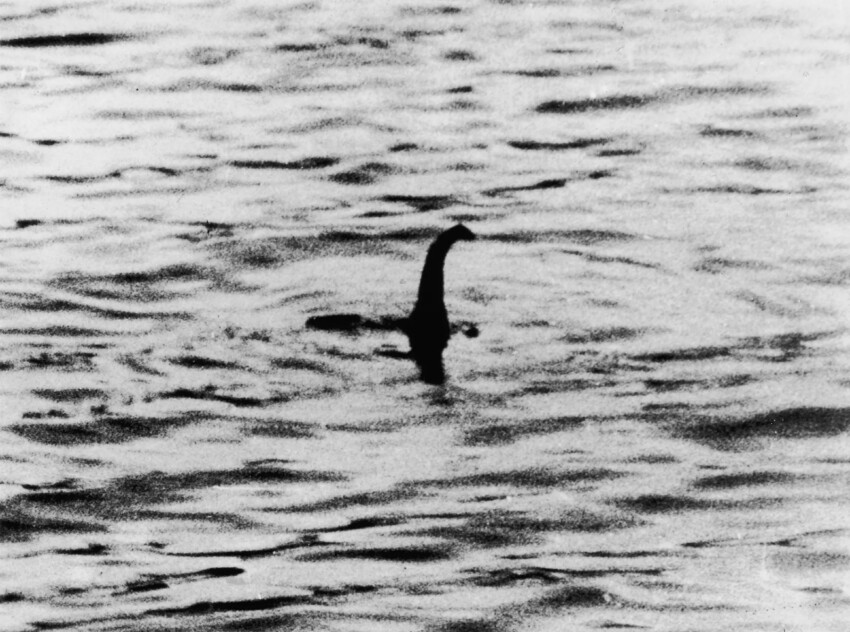
A long and slender creature with greenish colouring and black humps, resembling a serpent in its head and tail, yet bearing the overall appearance of a small brontosaurus: meet Nessie, the only monster to have earned itself an affectionate nickname.
According to one of the world’s most famous legends, this creature dwells in the depths of Scotland’s Loch Ness, surfacing only on rare occasions. Some say it’s a shy creature that prefers to remain unseen, whilst others maintain that Nessie simply favours the darkness of the depths to daylight.
Sightings of the Loch Ness Monster
One thing is certain about the Loch Ness Monster: if it truly exists, it’s ancient! The first recorded sighting of this mysterious creature dates back to 564 AD, when legend has it that Saint Columba, an Irish monk, managed to drive a monstrous being back into the loch through prayer. This creature had emerged from the waters and devoured one of his faithful servants.
For centuries, the existence of a lake monster dwelling in the depths of Loch Ness remained merely a folk belief, with very few written accounts to support it. The myth of Nessie is likely connected to the water spirits that feature prominently in Scottish folklore.
Everything remained quiet until the 1930s, when construction began on the A82, the road that runs alongside the loch. The first sightings of the modern era date from this period. A coincidence?
According to Nessie’s devoted believers, certainly not. They argue that the noise and disruption from the construction work awakened the monster, which had slumbered at the bottom of the loch for centuries, leading to a significant increase in sightings.
One of the earliest sightings that aroused scepticism was reported by a couple who owned a local hotel. Some questioned whether they had deliberately promoted the monster story to attract tourists to their business.
The first photograph to be given official credibility was taken by R.K. Wilson in 1934, and became known as the Surgeon’s Photo. However, it was later spectacularly debunked. The creature in the image was nothing more than a serpent-shaped head affixed to a toy submarine.
The Loch Ness Monster Today
For many people, the mysterious creature is merely an optical illusion or a story fabricated by local tourism operators. Yet there remain those today who firmly believe in its existence, split between those who think Nessie is a prehistoric animal that survived extinction (now thousands of years old!) and those who believe it evolved from a prehistoric species.
To date, there are officially more than one thousand recorded accounts of sightings of the Loch Ness Monster. Should you be fortunate enough to spot the creature, you can add your own testimony by sharing photographs and your account on the Official Register of Loch Ness Monster Sightings on the Scottish tourism board’s website.
Despite all these accounts and numerous investigations, there is currently no scientific evidence for Nessie’s existence. Various methods have been employed to find any trace of the monster, from simple baited traps to highly sophisticated sonar surveys conducted with the aid of mini submarines, all to no avail.
Nevertheless, the considerable sums invested in research and scientific analysis have not been wasted, as they have helped fuel the legend of the Loch Ness Monster and render it effectively immortal. Nessie has become a true cultural phenomenon, starring in films and cartoons, referenced in numerous television series and video games.
Loch Ness Monster-Themed Attractions
Following Nessie’s international popularity, the small settlements along the loch’s shores have become hugely popular tourist destinations. Needless to say, despite the area’s natural beauty, the primary draw for visitors remains the monster legend.
It comes as little surprise, then, that several monster-themed attractions have sprung up in the area. The most popular is undoubtedly the Nessie Hunting Boat Trip, a boat tour on the loch in search of the monster, followed by a visit to the Loch Ness Centre and Exhibition, a modern museum featuring an extensive section dedicated to the creature.
Perfect for a family day out is the themed park Nessieland, where children can play and have their photographs taken alongside terrifying reproductions of the monster.
In all the souvenir shops throughout the area, you’ll find t-shirts, posters, postcards, magnets and countless other merchandise featuring the monster’s image.
Loch Ness, where to stay in the area
To see all the facilities and book accommodation in Loch Ness use the form below, entering the dates of your stay.
We offer best rates If you find it cheaper we refund the price difference.
Free cancellation Most properties allow cancellation without penalty.
We're available 24 hours a day For any problem call Booking.com.
Loch Ness lies in the heart of the Scottish Highlands, along the geological fault known as the Great Glen, which cuts diagonally across Scotland from south-west to north-east.
The loch is approximately 270 km from Edinburgh (3.5 hours' drive) and 290 km from Glasgow (3.5–4 hours' drive). Just 37 km from Inverness, the "capital of the Highlands", Loch Ness is easily accessible by both private car and public transport.
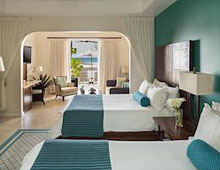 Hotel
Hotel  Budget accommodations
  Apartments
  Family Hotel
 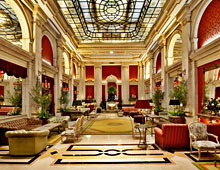 Luxury Hotel