Edinburgh
From picturesque vistas to Harry Potter's pages, enchanting Edinburgh is brimming with magic. Essential information for making the most of Scotland's captivating capital.
You’ve made your decision: your holiday will be in Scotland. You’ve probably already booked your flight. But now comes the question that troubles every visitor: what to see in Scotland? Of course, there’s no single answer—it all depends on how much time you have. Just a weekend? A week? Two weeks? Our advice is to build an itinerary tailored to you based on how much you enjoy exploring, how long you want to spend in each place, and which areas you decide to visit, using this list of the best things to see in Scotland.
As always, the best way to explore this magnificent country is to hire a car. Distances aren’t huge and the road network is excellent. The thing is, Scotland is beautiful everywhere, so it won’t be easy to “concentrate” the best sights within a few square kilometres. Plus, the weather will probably have a say on one or two days, forcing you to change your plans or modify your itinerary on the fly. But don’t be discouraged—set off to discover the best things to see in Scotland.
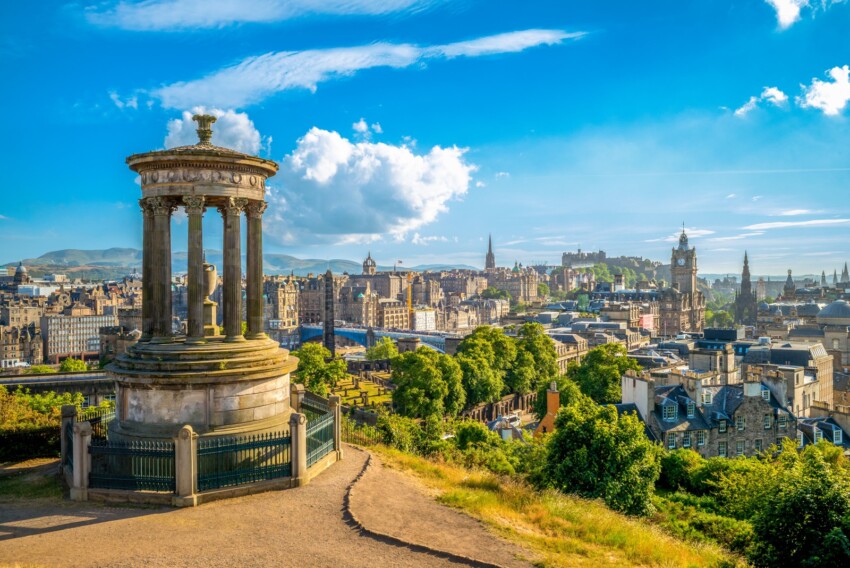
Most likely, your trip to Scotland will begin in its capital, Edinburgh. The country’s main international airport is located here. As soon as you land, you’ll be swept up in Scottish atmosphere from the very first moment, but don’t hesitate—head straight to the city centre using public transport or a hire car.
Edinburgh’s centre is built around the Royal Mile, a beautiful pedestrian street that connects two of the city’s main attractions: Edinburgh Castle and Holyrood Palace (Holyroodhouse), the official Scottish residence of the British Royal Family. That alone will take up a full day, but there’s more: along the Royal Mile you’ll also find St Giles’ Cathedral, the Edinburgh Museum, where you can explore the city’s social and industrial history, and the modern Scottish Parliament building, whose architecture creates a striking contrast with the rest of the Old Town.
There’s plenty more to see in Edinburgh beyond the Royal Mile. For instance, you can explore Holyrood Park, a magnificent park with walking trails that climb the hill overlooking the city. The most picturesque spot in the park, perfect for taking wonderful photos, is Arthur’s Seat, offering extraordinary views of the Scottish capital. After descending, don’t miss a walk along Princes Street, still in the city centre but outside the Old Town, where you can visit the iconic monument dedicated to writer Sir Walter Scott and, at the eastern end, climb the steps leading to Calton Hill park, home to the famous Dugald Stewart Monument, which appears on all Edinburgh postcards, and the National Monument of Scotland, dedicated to Scottish soldiers and sailors who died in the Napoleonic Wars.
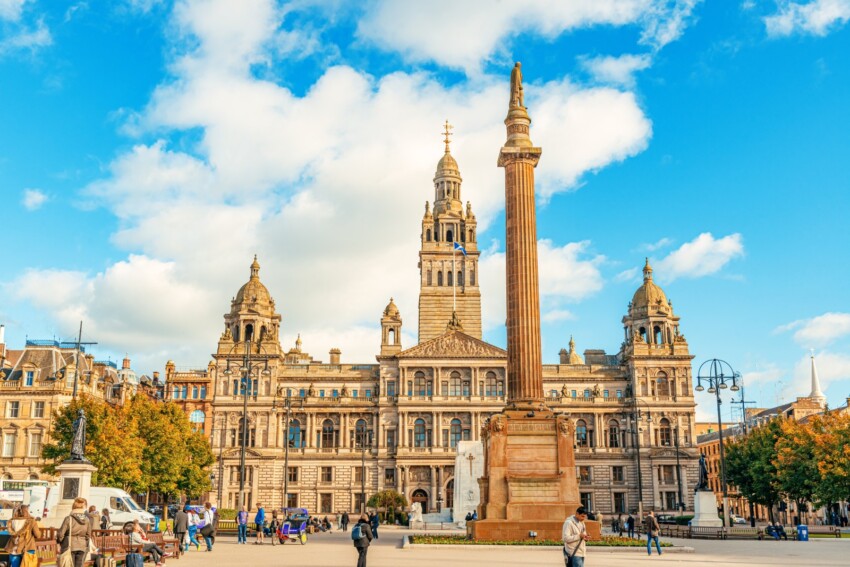
Scotland’s “other” city is much-maligned Glasgow. Less beautiful than Edinburgh, certainly inferior in terms of monuments, it’s nonetheless worth a visit if only to see how hard it’s working to shake off its past as a dreary port city.
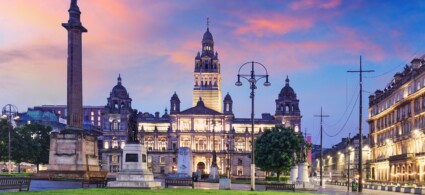
Glasgow is becoming famous for its eclectic architecture, with modern buildings like the Armadillo (SECC) and the BBC Tower standing alongside magnificent Victorian edifices such as City Chambers and the Kelvingrove Art Gallery and Museum, which—thanks to its extensive collection of artwork, historical artefacts and interactive exhibitions—is ideal for spending a few hours immersed in Glasgow’s culture and history, especially if you find yourself with a rainy day.
During your stay in Glasgow, dedicate a few hours to the Barras Market, an outdoor market that will let you discover Glasgow’s authentic spirit, browsing stalls for local goods and vintage items. The West End neighbourhood is also worth exploring, known for its bohemian atmosphere and tree-lined streets. Finally, relax in Glasgow Green, an urban park in the city’s heart, which houses the interesting People’s Palace Museum.
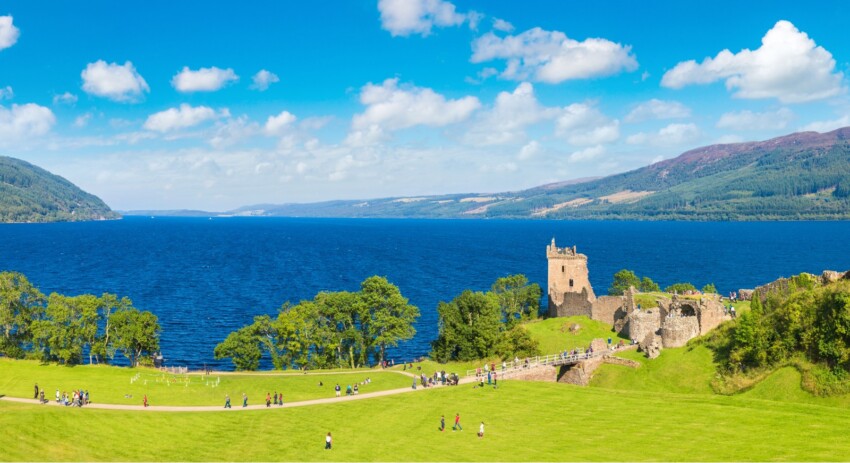
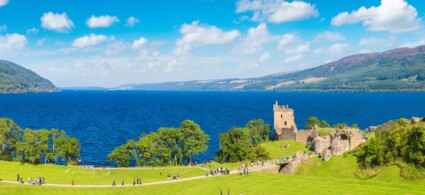
Perhaps the most famous attraction on the list of must-see places in Scotland (though not everyone realises it’s here) is Loch Ness, the very loch where the famous monster lives! Suspended between legend and reality, the Loch Ness Monster, or Nessie to friends, is central to the daily life of locals, not so much because of its sightings, but because it’s found in every souvenir shop!
The loch, which officially goes simply by the name Ness (“Loch” in Scottish Gaelic simply means “lake”), has a long, narrow shape, with its eastern end a short distance from the city of Inverness, easily reached in 3 hours by motorway from Edinburgh. A circuit round the loch takes roughly an hour and a half by car, and along its shores you’ll find various viewpoints, the fascinating ruins of Urquhart Castle, the Foyers Falls, and little else. At the southern end, you can take the path leading up to the Allt na Criche plateau, from which you can admire a truly stunning panorama.
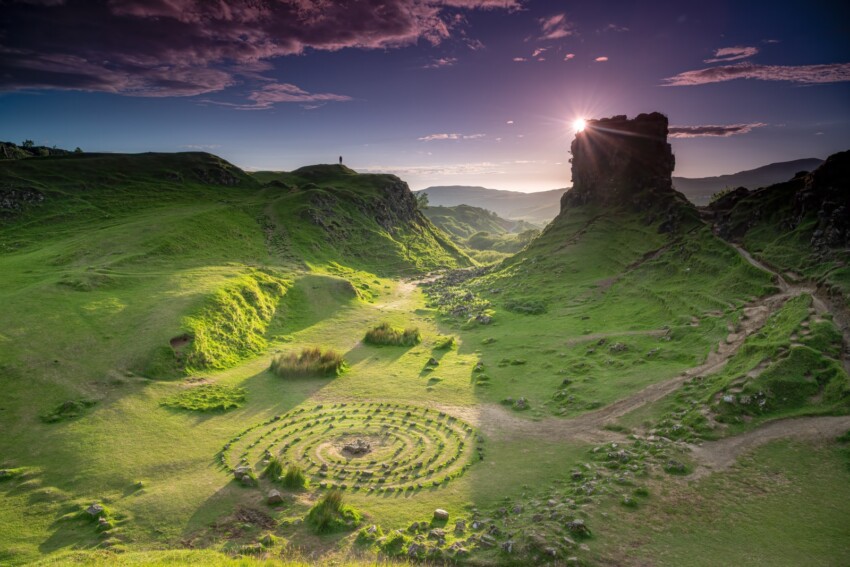
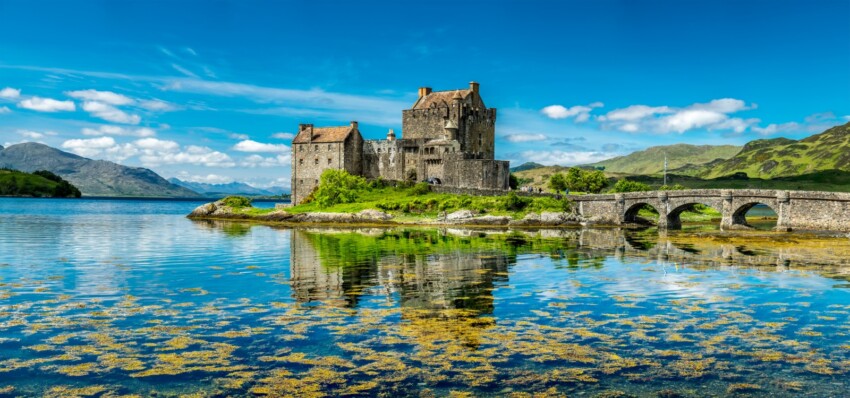
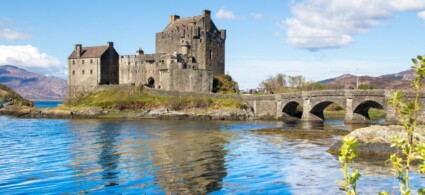
The Isle of Skye is undoubtedly one of Scotland’s most enchanting and picturesque destinations. Located on the country’s north-western coast in the Inner Hebrides archipelago, it’s a destination renowned for its breathtaking landscapes, unique culture and rich history. It’s not particularly convenient to reach, being 5-6 hours’ drive from Edinburgh and around 3 hours from Inverness, but no ferry is needed as it’s connected to the mainland by the Skye Bridge. Just before the bridge, you’ll find the beautiful Eilean Donan Castle, situated on a small island, which absolutely deserves a stop.
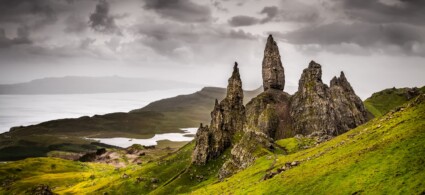
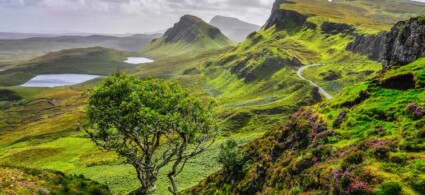
Once you arrive, you’ll be greeted by breathtaking views of imposing mountains, rolling hills, hidden valleys, lochs and coastline. Among Skye’s most famous viewpoints are Quiraing, Old Man of Storr and Fairy Pools. The island is generally rich in Gaelic culture, allowing you to immerse yourself in this fascinating heritage by visiting small villages, hearing the Gaelic language and attending cultural events.
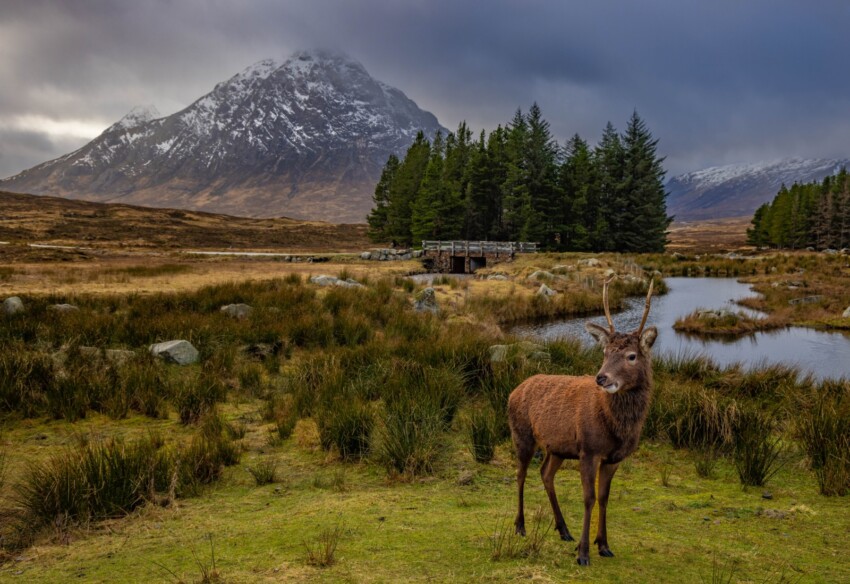
The heart of Scotland is represented by the Highlands, the country’s most wild and picturesque region. Wandering aimlessly through this vast area, you’ll have the chance to discover boundless landscapes, ancient forests, freshwater lochs and plenty of local wildlife. You won’t find many villages, let alone cities: here, nature rules.
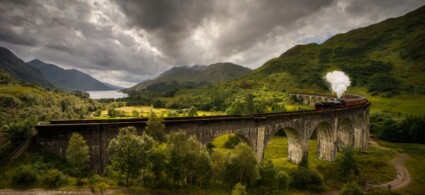
Among the most beautiful things to visit while touring the Highlands is the Glenfinnan Monument, the picturesque village of Plockton overlooking a bay inhabited by seals, the beach at Morar, which for a moment will make you forget the Scottish climate and transport you to the Caribbean, and certainly Cape Wrath, one of the northernmost points in Britain, a wild place difficult to reach but where you can enjoy panoramas you’ll never forget.
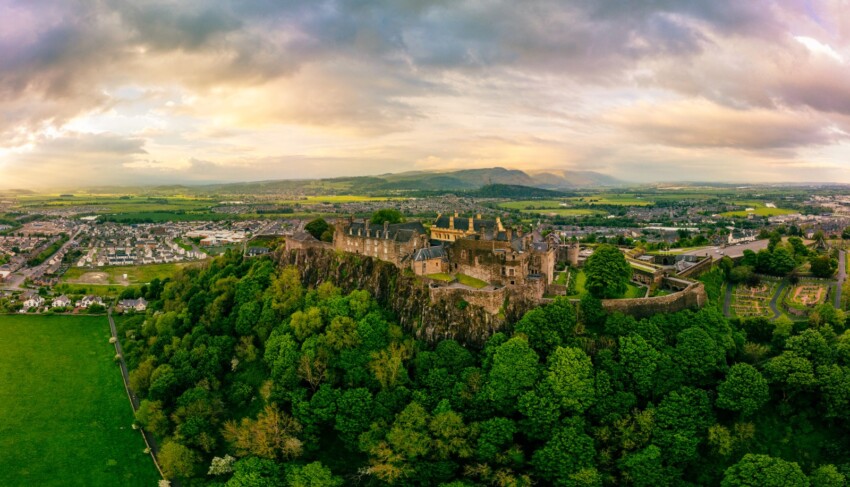
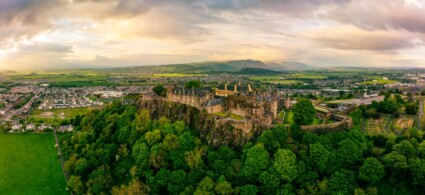
Stirling is a small Scottish village perched on a hill that, despite itself, was at the centre of violent battles over territorial conquest during the Middle Ages. Today, the legend of William Wallace, leader of the Scottish forces who defeated the English here in 1297, is still celebrated.
Stirling village is famous for hosting the beautiful castle of the same name, which dominates the valley thanks to its position on a cliff high above the surrounding landscape. Visiting Stirling Castle is a unique experience, thanks to its rooms spanning various periods, its gardens and courtyards, and the air of mystery that permeates its corridors.
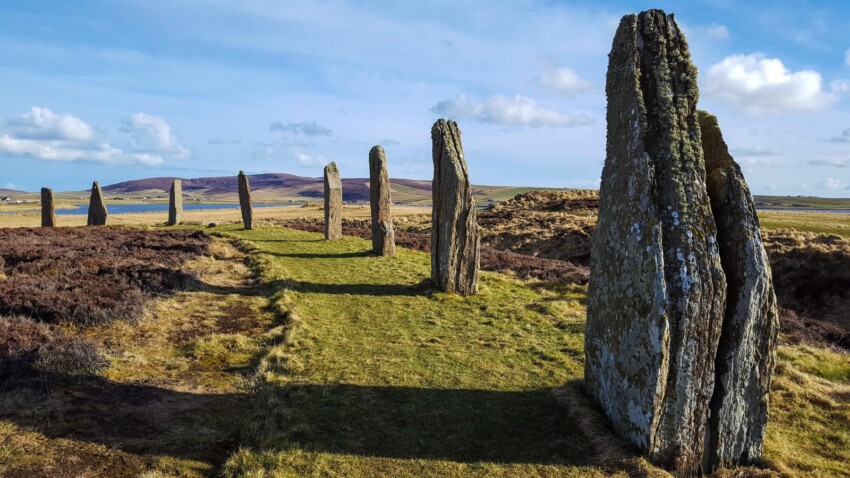
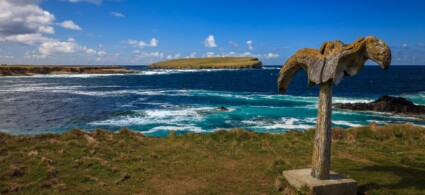
The Orkney Islands are a wild archipelago located a short distance from mainland Scotland’s north-east coast. Comprising roughly 70 islands and islets, though not all are inhabited. You visit Orkney to venture off the beaten path and to explore ancient prehistoric necropolises that sit alongside medieval castles and fortresses, as well as pristine, wild nature.
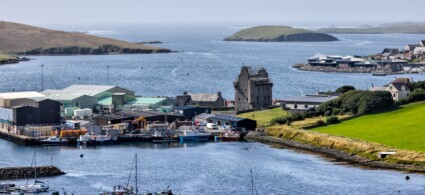
Among the most interesting things to visit in Orkney is certainly Skara Brae, an archaeological site where you can view settlements dating back over 5,000 years. In contrast stands the town of Stromness, a truly enchanting fishing village with a compact historic centre and genuinely intriguing atmosphere. Don’t miss Kirkwall with its beautiful St Magnus Cathedral dating from 1137, and the mysterious Ring of Brodgar, a circle originally made up of 60 monoliths, of which 27 remain standing today.
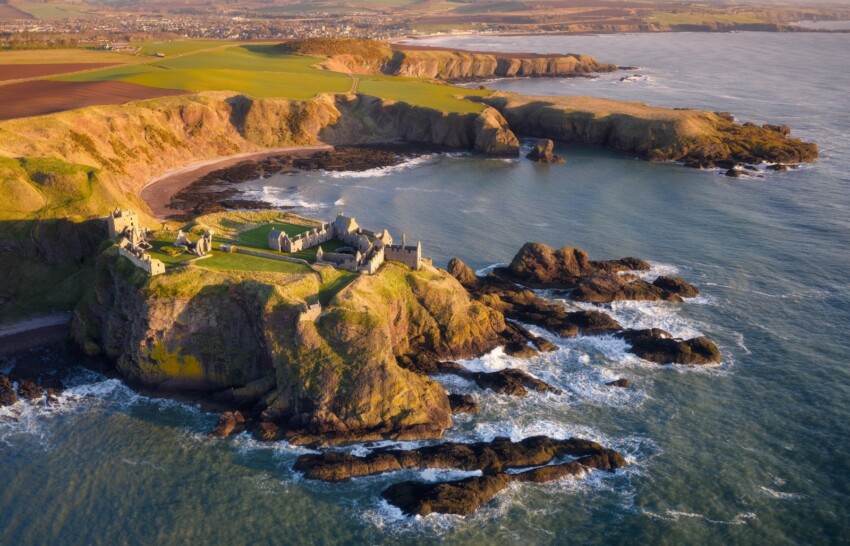
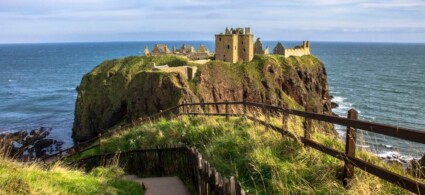
Dunnottar Castle is located near Stonehaven, in a postcard-perfect position on a small peninsula jutting dramatically into the sea. It’s one of Scotland’s most interesting sights to visit, precisely because of its overall panorama.
Reachable via a steep path on foot, the castle also represents an important chapter in Scottish history—William Wallace challenged a garrison of English soldiers here and won decisively.
Dunnottar Castle is easily accessible from Aberdeen, as it’s only a few kilometres south. It’s also quite convenient from Edinburgh, reachable in 2-3 hours via the coastal road passing through Dundee. If you can, visit at sunset, when the colours of the sky and sea create truly unique chromatic combinations.
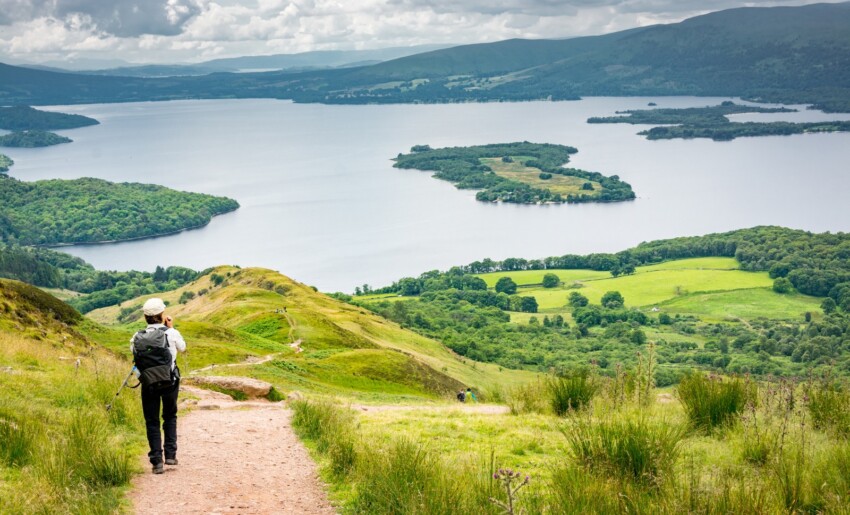
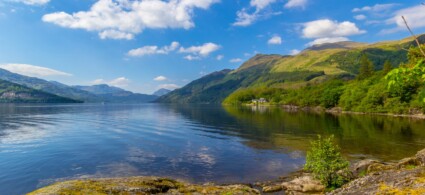
The last—but certainly not least important—of Scotland’s most beautiful sights is Lomond Lake, or Loch Lomond in Scottish Gaelic. It’s Britain’s largest loch, thanks to its 38 kilometres in length and 8 in width, located in the heart of the Trossachs, a Scottish region described as “the Highlands in miniature” for its variety of landscapes and colours.
Popular with tourists for its extensive network of walking and cycling trails and water activities, the most important resort area in the Trossachs is undoubtedly Loch Lomond. This loch is truly a paradise, thanks to its calm waters and the idyllic villages dotting its shores. Along the road that runs beside it are several viewpoints where you can stop to take beautiful photographs.
Loch Lomond contains 37 islands, all waiting to be discovered on a boat trip, small cruises departing from the village of Balloch. A visit to the village of Luss is also interesting, with its sandstone cottages and small beaches on the loch where you can spend a day in complete relaxation.
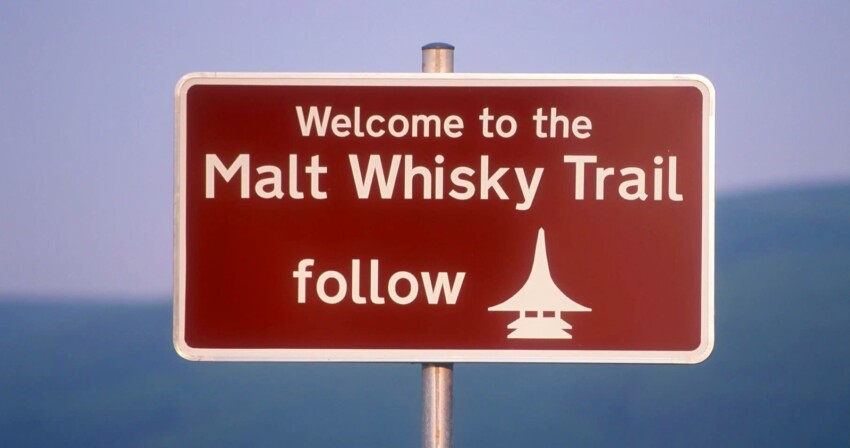
The Whisky Trail, officially known as the Malt Whisky Trail, is a scenic driving route that winds through the Strathspey region, located roughly between Inverness and Aberdeen. You can explore it by car or public transport.
Here you’ll discover 9 whisky distilleries, home to one of Scotland’s most celebrated exports. These are Benromach, Dallas Dhu, Glen Moray, Glen Grant, Strathisla, Glenfiddich, Speyside Cooperage, Cardhu and The Glenlivet. Of these, Dallas Dhu is the only one no longer in production, though it remains open as a heritage distillery.
The distilleries on the Whisky Trail are conveniently close to one another. Whilst you needn’t visit them all, we recommend taking your time over a few days to truly appreciate the route and discover the authentic spirit of Scottish culture and the region’s rich heritage.
 Hotel
Hotel  Budget accommodations
  Apartments
  Family Hotel
  Luxury Hotel