Edinburgh: Loch Ness, Glencoe & the Scottish Highlands Tour
18.051 reviews
Buy now
From 76,03€ per person
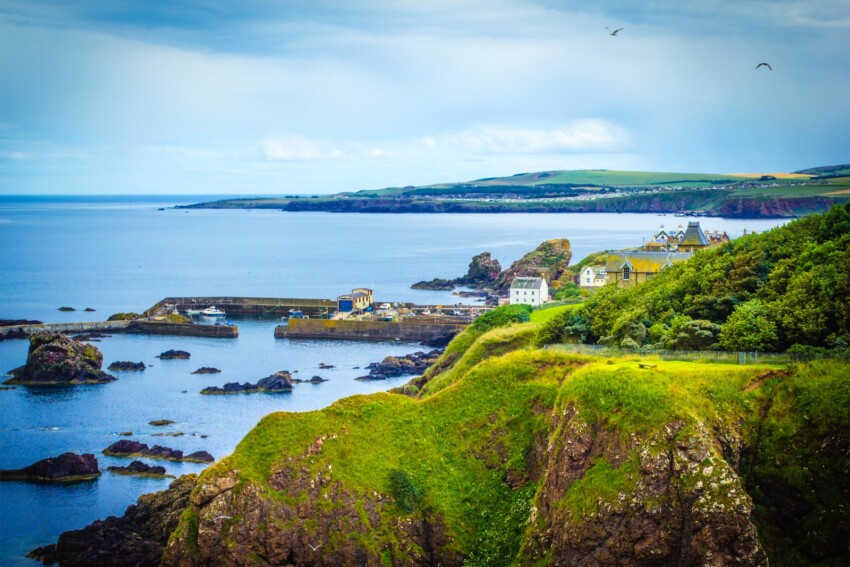
Southern Scotland extends across the Borders and Lothians regions, rich in rolling hills, dramatic coastlines, verdant valleys, charming towns and a history shaped by conflict with the English crown.
This enchanting area, which serves as a cultural bridge between Scotland and England, offers visitors a perfect blend of natural wonders, ancient abbeys and characterful market towns steeped in centuries of border history.
From romantic medieval abbey ruins to stately homes dotting the landscape, the Borders offer an authentic Scottish experience away from the well-trodden tourist routes of the Highlands. Here you’ll find a land shaped by the dramatic stories of the “border reivers” (border raiders), literary giants such as Sir Walter Scott and textile traditions that continue to influence the world of fashion.
This is the homeland of Robert Burns, Scotland’s national poet, who celebrated picturesque towns and great gardens that inspired his works.
The entire Borders region is renowned for its local specialities including cheeses, seafood delicacies, berries and for its trails immersed in beautiful natural landscapes.
Whether you’re a history enthusiast, nature lover or in search of authentic traditions, this region will captivate you with its understated charm and rich cultural heritage.
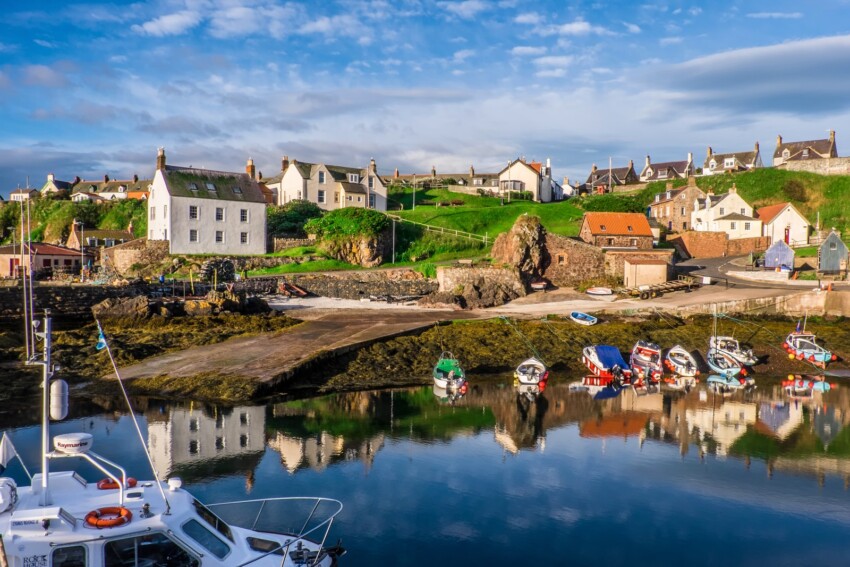
If your Scottish trip doesn’t venture far from Edinburgh but you’d like to see a wild and solitary corner, we recommend a short detour to St Abbs, a tiny, picturesque fishing village surrounded by a truly spectacular stretch of coastline.
At St Abbs Head you’ll find many of the characteristic features of the Scottish landscape: sheer cliffs plunging into turbulent seas and covered with flowering heather, rugged, barren terrain that battles daily against the elements, a lighthouse scanning the waters, and a fishing community that continues this demanding trade.
Here you can enjoy scenic boat trips to admire the coastline from the sea, go scuba diving or take up birdwatching.
The most spectacular spot is undoubtedly the St Abbs Head Nature Reserve, 80 hectares of craggy, jagged coastline where towering rock stacks and cliffs reaching 100 metres plunge dramatically into the sea and are home to thriving colonies of seabirds.
We recommend following the cliff-top path that leads all the way to the lighthouse (roughly 1.5 km of walking) from where you can admire simply magnificent scenery.
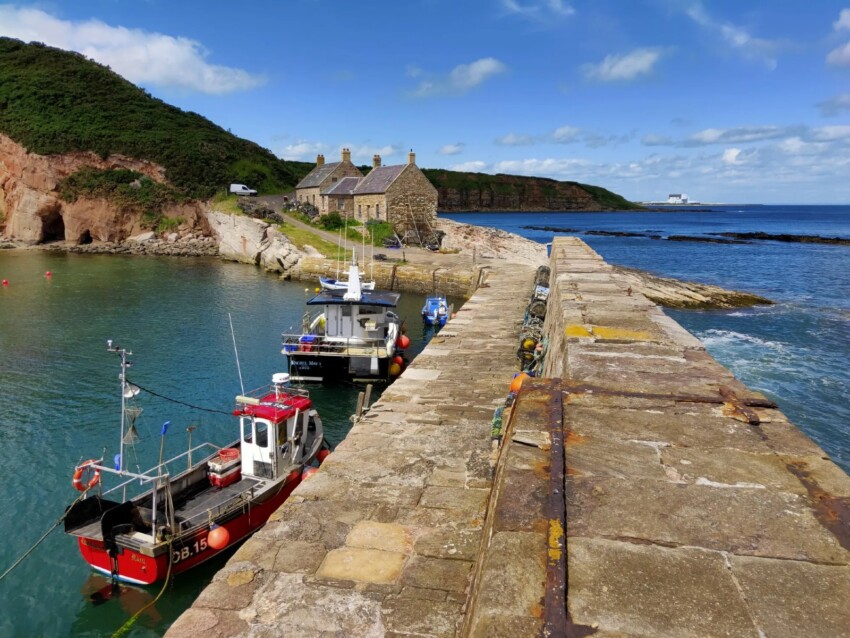
Cove Harbour is a picturesque hidden port on the Berwickshire coast that captures the very essence of maritime Scotland. This tiny fishing village, nestled between towering cliffs, represents one of the most well-preserved gems of the east coast, a place where time seems to have stood still.
The true magic of Cove Harbour lies in its staircase carved into the rock, a Victorian feat of engineering that leads down to the port below through a natural tunnel. As you descend, the landscape gradually unfolds to reveal the enchanting sheltered bay, where a handful of colourful fishing boats bob gently on the crystalline waters of the North Sea.
The harbour, active since the 16th century, retains its historical charm with traditional stone warehouses and fishermen’s cottages huddled against the rocky cliffs. On calm days, you can observe local fishermen still practising traditional fishing methods, whilst waves gently lap against the ancient walls of the pier.
The wild beauty of the place is heightened by the coastal paths that branch off in both directions, offering stunning views over the rugged coastline.
The Borders abbeys are magnificent testimonies to Scottish medieval architecture and the spirituality of the age. These historic monuments tell centuries of history, conflict and religious devotion.
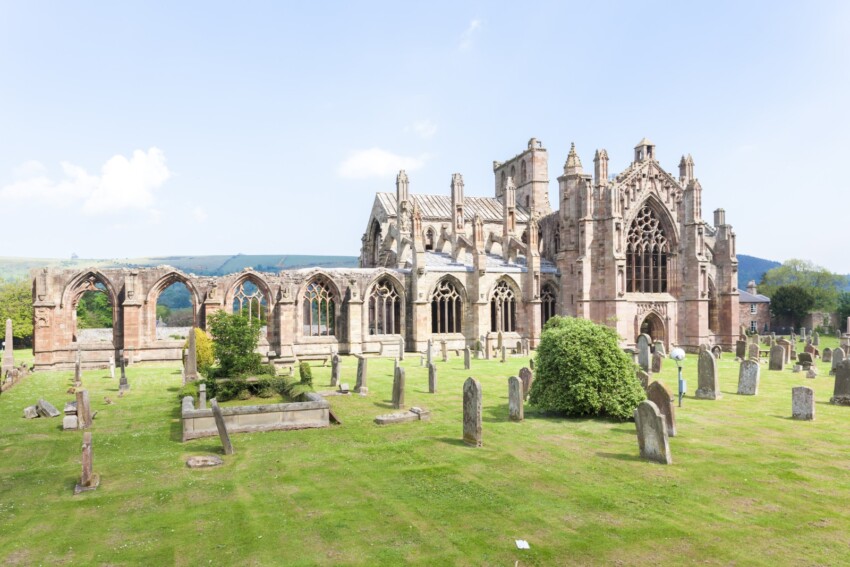
Melrose Abbey is undoubtedly the most famous of the Borders abbeys and, according to tradition, houses the heart of Robert the Bruce. Its elegant ruins display some of the finest examples of medieval architecture in Scotland, including the famous carvings such as the “Melrose Pig” playing the bagpipes.
The ruins of Melrose Abbey reflect the prestige and wealth that once flowed into this monastery, which traded wool and hides with Flanders: this opulence allowed the recruitment of a host of skilled stonemasons who transformed transepts, columns and vaults into veritable stone embroidery, of exceptional quality and craftsmanship.
Parts of the abbey have been lost, such as the western façade of the church, but others have miraculously survived and showcase their full beauty to visitors, such as the pulpitum and presbytery.
The south transept is enriched with ornamental leaf and flower motifs and angels playing musical instruments. Look up at the gables from which mysterious decorative gargoyles protrude, with sinister expressions. The wealth of ornamental detail is so varied and intricate that an audio guide will certainly help you not to miss any detail.
Next to the church stands the Commendator’s House, a red sandstone structure. Also worth seeing is the Priorwood Garden, now an orchard.
The abbey’s gothic structure is particularly atmospheric at sunset, when the pink sandstone takes on golden hues that create an almost magical atmosphere.
After visiting the abbey, don’t miss the picturesque village of Melrose. The historic centre is home to antique shops and artisanal boutiques with Victorian and Georgian façades alongside traditional cafés and historic pubs. The Trimontium Museum tells the story of Roman presence in the region, while the annual Melrose Festival keeps local traditions alive with spectacular horse riding events.
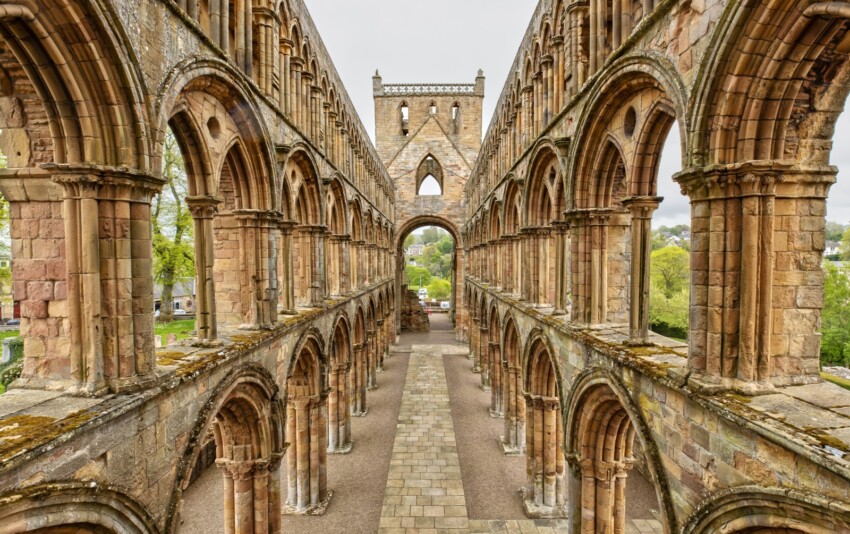
This majestic abbey in the Jed Water valley was witness to the endless Anglo-Scottish struggles to such an extent that the Scots themselves destroyed both abbey and castle of the royal burgh (fortified town) rather than let them fall into English hands.
The ruins of Jedburgh Abbey dominate the town from atop the rocky base on which they were built, and the red, yellow and grey sandstone changes colour with the shifting light and seasons, giving the abbey ever-changing appearances, sometimes serene and luminous, sometimes gloomy and threatening.
In the archaeological section at the entrance you can admire the Jedburgh Comb, a beautiful ivory comb carved from a walrus tusk dating from 1100 and decorated with a dragon and a griffin.
The pride of the monastic site is undoubtedly the Abbey Church, superbly preserved: as you walk down the central nave, your heart will skip a beat at the magnificent and majestic vista, a superb example of the transition from Romanesque to Gothic style. Truly spectacular!
Remember to climb the western façade to the gallery from where you can take beautiful photographs of the central nave from above.
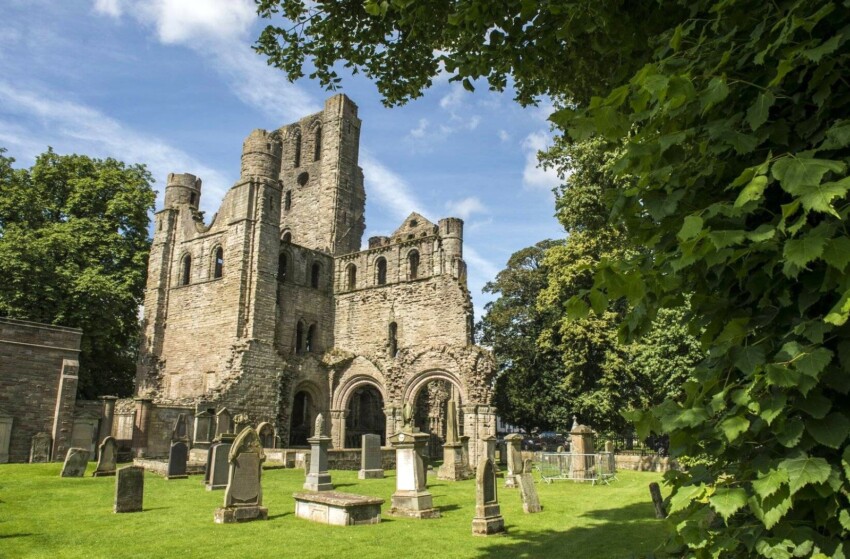
Set in the bucolic landscape of the Tweed Valley, amongst gentle hills and babbling streams, Kelso Abbey is a ruined Benedictine abbey that retains all the charm of the period when the Benedictines concentrated their power and influence.
Kelso was besieged by the English three times and ultimately defeated, leaving behind all the power of the devastation that is clearly visible today: indeed, war and the Reformation heavily influenced the fate of the Borders abbeys.
The ruins give visitors a splendid sight, especially thanks to the Norman church, which formed part of the complex and remained almost intact, all set within a magnificent bucolic setting of meadows and woodland.
Beyond the abbey, visit the village of Kelso, described by Sir Walter Scott as “the most beautiful market town in Scotland”. Kelso impresses with its magnificent main square and Georgian architecture. The Junction Bridge, a 19th-century suspension bridge, is a remarkable example of Victorian engineering, whilst Kelso Racecourse hosts some of Scotland’s most important equestrian events.
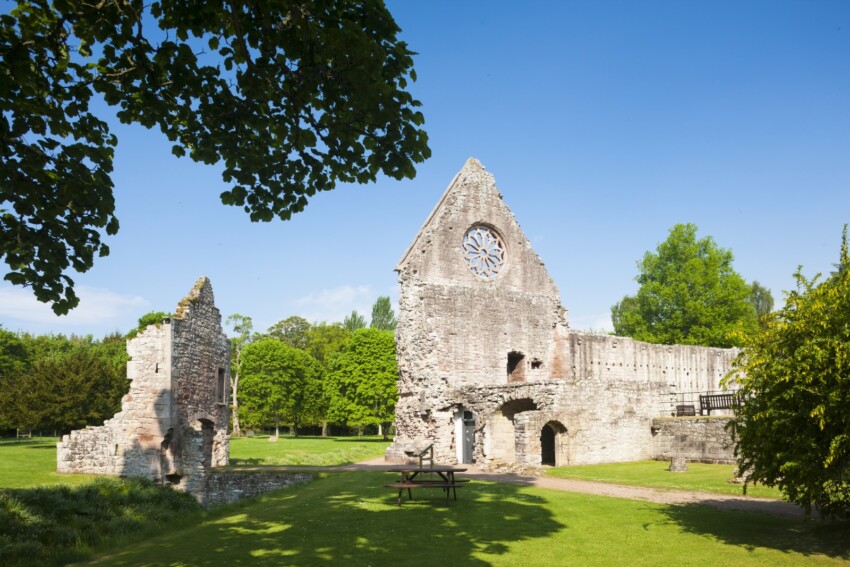
Hidden in a bend of the Tweed lie the majestic and evocative ruins of Dryburgh Abbey, in an idyllic setting amongst tree-covered hills, verdant meadows where flocks of sheep and cattle graze, and babbling streams.
Here the greenery of nature provides a backdrop that highlights the reddish stone of which the abbey was built, which has become part of popular tradition also thanks to the stories of Walter Scott, who lies buried in one of the cloisters.
This romantic setting will enchant you despite the abbey’s dimensions being smaller than the other abbeys in the valley.
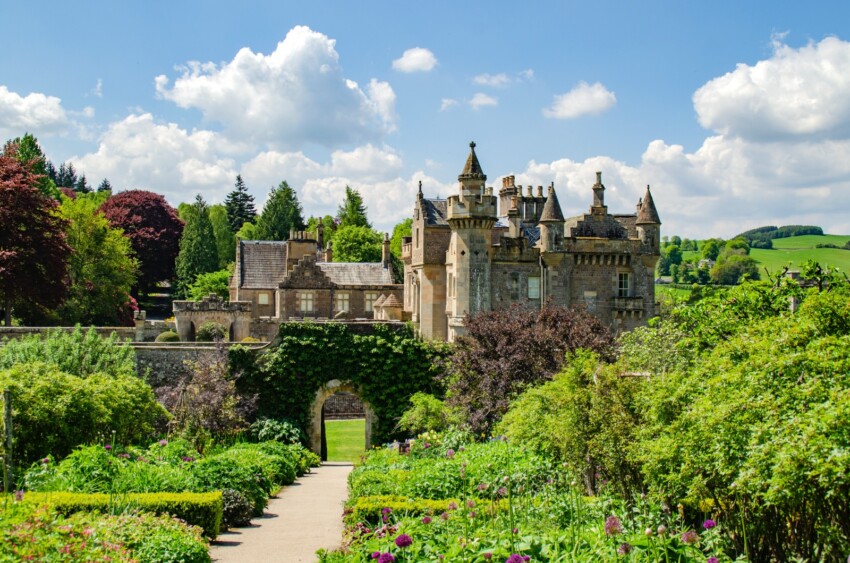
Abbotsford House, the magnificent home of Sir Walter Scott, is a masterpiece of Scottish baronial architecture. The author’s personal library contains over 9,000 rare volumes, whilst the castle’s rooms house an extraordinary collection of weapons, armour and objects belonging to historical figures such as Rob Roy and Bonnie Prince Charlie. The formal gardens, designed by Scott himself, offer splendid views of the River Tweed and represent a perfect example of a romantic Scottish garden.
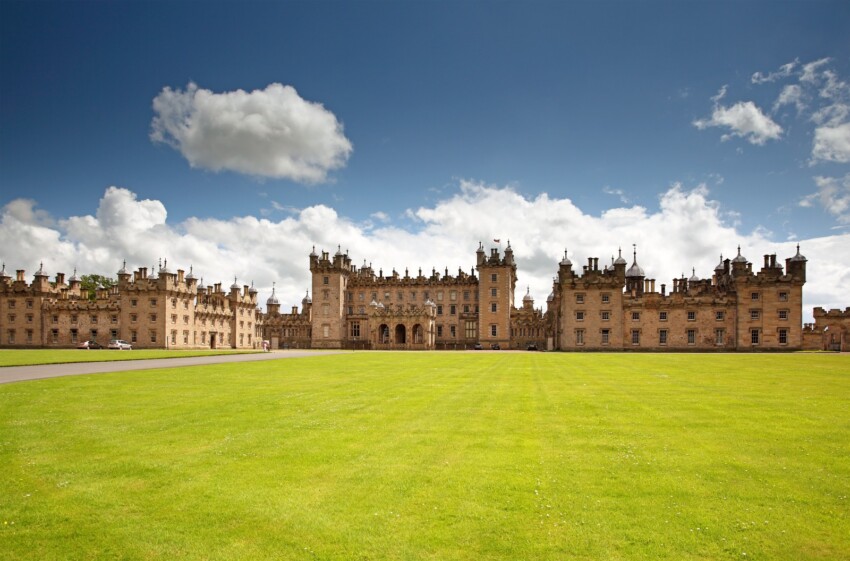
Floors Castle, Scotland’s largest inhabited castle and the residence of the Duke of Roxburghe, impresses visitors with its impressive collection of Flemish tapestries and rare Meissen and Sèvres porcelain. The castle’s galleries showcase works by renowned artists such as Matisse and Picasso, whilst the Victorian gardens and panoramic terrace offer breathtaking views of the Cheviot Hills.
Thirlestane Castle stands out for its spectacular 17th-century plasterwork and sumptuous ducal apartments. The castle also houses a unique collection of period toys that fascinates visitors of all ages. Italian-style gardens and a Victorian maze complete this extraordinary historic property.
Manderston House represents the pinnacle of Edwardian splendour. Its famous silver staircase, unique in the world, is just one of the elements that make this home a perfect example of the lifestyle of the aristocracy of the early 1900s. The perfectly preserved interiors and formal gardens with an art nouveau greenhouse transport visitors to an era of extraordinary luxury and refinement.
In the following map you can see the location of the main places of interest mentioned in this article.
Scottish Borders cuisine reflects the richness of the territory and its history. The Border Tart, with its filling of dried fruit and amaretto, and the Selkirk Bannock, a rich fruit bread with a recipe dating back to the 16th century, are just some examples of local sweet traditions. Hawick Balls, traditional mint sweets, and Jethart Snails, distinctive mint confections produced in Jedburgh, are sweet childhood memories for many Scots.
The contemporary gastronomic scene in the Borders is vibrant and innovative. Restaurants such as The Hoebridge in Gattonside and Provender in Melrose reinterpret Scottish culinary tradition using high-quality local ingredients. The Caddy Mann, near Jedburgh, is renowned for its local game dishes, whilst The Townhouse in Melrose offers an elegant dining experience in a historic building.
Each season in the Scottish Borders has its own particular charm. Spring brings nature’s awakening, with flowering gardens and lambs dotting the fields. Spring festivals celebrate the return of warmer weather, whilst mild temperatures make it ideal for trekking and outdoor activities.
Summer is the season of the Common Ridings, equestrian festivals that keep alive the memory of ancient border patrols. The long days allow you to make the most of your time exploring the region, whilst numerous outdoor events enliven towns and villages.
Autumn delivers spectacular landscapes with vibrant colours and is the ideal season for salmon fishing. Gastronomic festivals celebrate local produce, whilst the quieter atmosphere allows you to fully appreciate the region’s beauty.
Winter transforms the Borders into a fairytale landscape, with castles decorated for Christmas and welcoming pubs where you can warm yourself by the fire. Christmas events add magic to the season, whilst more affordable prices make this period appealing for budget-conscious travellers.
The Scottish Borders are easily accessible from both Edinburgh and Newcastle. The region’s proximity to these major cities makes it an ideal destination for both extended stays and day trips.
The Borders Railway offers a scenic train journey from Edinburgh to Tweedbank, making the region more accessible than ever. The train journey itself passes through breathtaking landscapes and is an unforgettable experience in itself, allowing travellers to admire the rolling hills and verdant valleys that characterise this region.
Melrose, situated in the heart of the region, is the ideal base for exploring the main attractions, with a variety of bed & breakfasts in Victorian buildings and charming boutique hotels.
Peebles is perfect for outdoor enthusiasts, whilst Kelso enchants with its boutique hotels in Georgian buildings, ideal for those seeking authentic Borders charm.
Galashiels, well connected to Edinburgh by the Borders Railway, offers more budget-friendly options without sacrificing comfort, whilst Jedburgh is strategically positioned for those wishing to explore Northumberland as well.
 Hotel
Hotel  Budget accommodations
  Apartments
  Family Hotel
  Luxury Hotel