Highland Gate, Stirling by Marston's Inns
Stirling - Kildean Business Park, Drip Road,
Book now
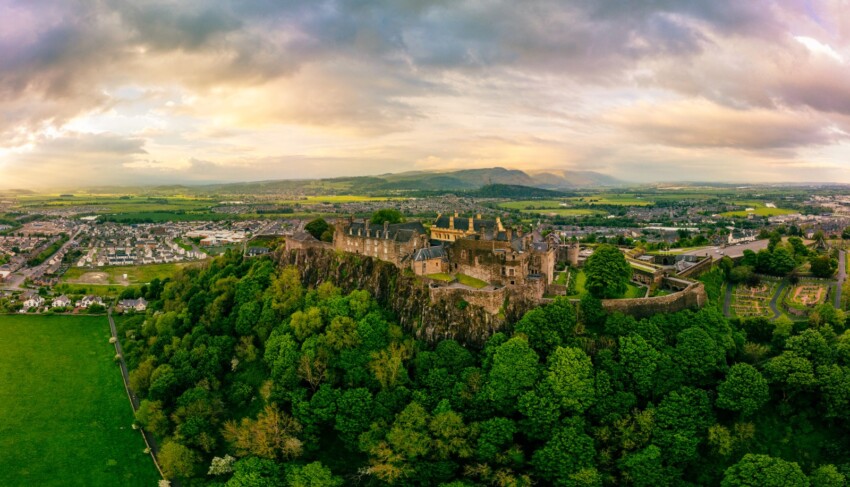
Stirling is one of the most historically significant cities in the entire country. Strategically situated between the Scottish Highlands and Lowlands, this ancient royal burgh stands upon a rocky crag dominated by the imposing Stirling Castle.
Its strategic position gave it a crucial role in the Scottish Wars of Independence, making it the scene of legendary battles such as Stirling Bridge, where Scottish forces led by William Wallace defeated the English army in 1297, and again in 1314 under the command of Robert Bruce at the Battle of Bannockburn, just 3 kilometres from Stirling.
With a perfectly preserved medieval town centre, Stirling maintains a vibrant atmosphere thanks to its university and thriving cultural scene. The cobbled streets of the Old Town lead visitors through centuries of history, whilst panoramic views from the castle’s summit embrace the surrounding landscape all the way to the Highlands mountains.
Each year, thousands of tourists flock to this plain to pay homage to the legend of the great warrior William Wallace and to admire his famous sword. A tip: if you’re planning to stay in Stirling between May and October, we recommend booking well in advance.
Stirling encompasses within a few square kilometres some of the most significant monuments in Scottish history. From the impressive castle to ancient churches, every corner of the town tells stories of battles, monarchs and legendary figures who shaped the destiny of the nation.
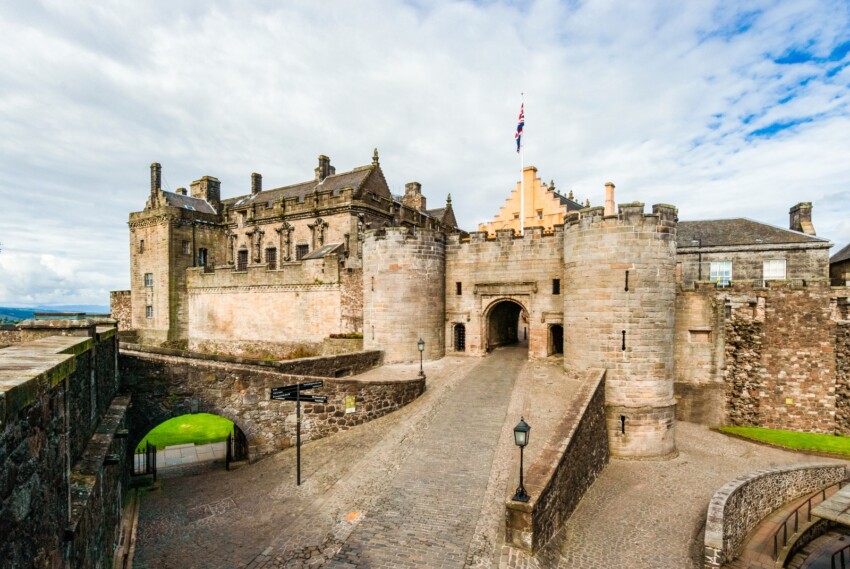
The imposing Stirling Castle dominates the town’s landscape from atop a volcanic outcrop, offering spectacular views across the entire surrounding region. This ancient royal stronghold is one of Scotland’s largest and most important castles, comparable in historical and architectural significance only to Edinburgh Castle.
Built between the 12th and 16th centuries, the castle was a favoured residence of the Stuart monarchs and the stage for numerous crucial historical events. Within its walls, Mary Queen of Scots was crowned (at just nine months old) and James VI was crowned, who would later also become King of England.
When visiting the castle, you can admire the Great Hall, the largest medieval hall ever built in Scotland, completed for James IV in 1503. With its barrel-vaulted timber ceiling and expansive Gothic windows, it represents a masterpiece of Scottish Renaissance architecture. Equally impressive is the Chapel Royal, commissioned by James VI in 1594 for the baptism of his son, Prince Henry.
The restored royal apartments offer an authentic glimpse into 16th-century court life, with period furnishings, tapestries and decorations that faithfully recreate the atmosphere of the time. Particularly fascinating are the Stirling Heads, a series of timber ceiling carvings depicting monarchs and mythological figures, considered among the finest examples of Scottish Renaissance art.
The outer walls and bastions offer spectacular views over the Stirling plain, the River Forth and, on clear days, as far as the Highland mountains. From here you can clearly identify the battlefields of Stirling Bridge and Bannockburn, sites of crucial Scottish victories against the English.
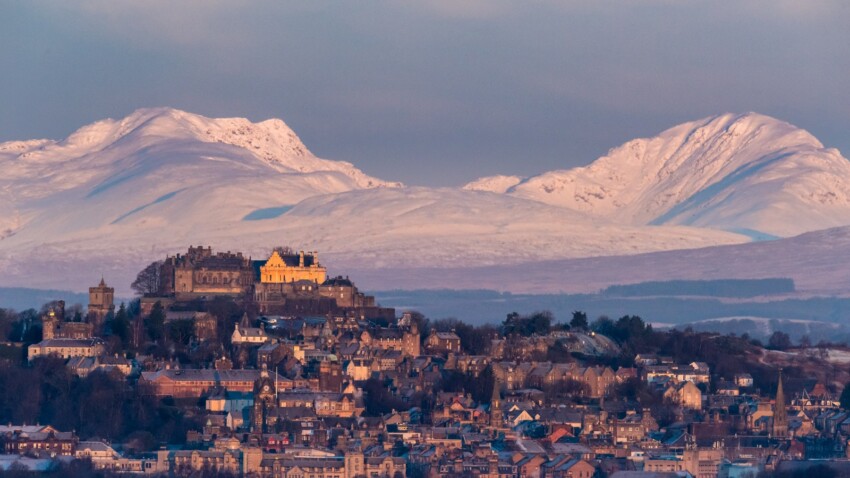
Although many hurried tourists pass through Stirling quickly, the Old Town boasts an ancient historic centre surrounded by walkable walls, along a circular pathway called the Black Walk from which you can enjoy wonderful views of the surrounding area. Several period buildings are also worth visiting, including Argyll’s Lodging, Mar’s Wark and two prisons, the Old Town Jail and the Tolbooth.
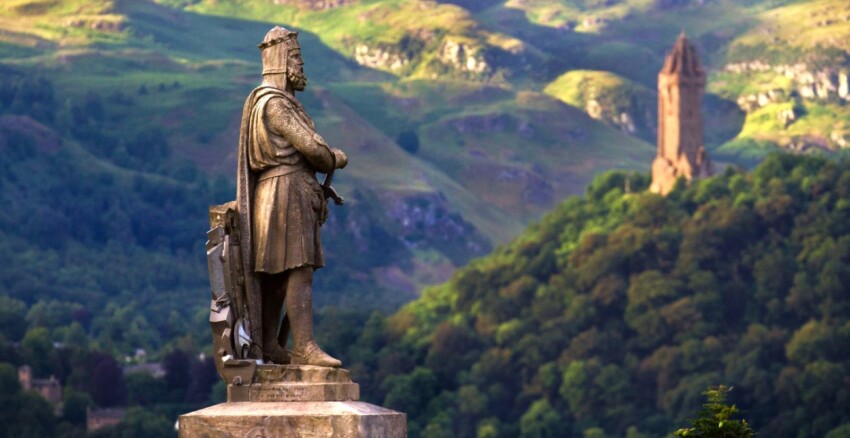
The National Wallace Monument is an imposing Victorian tower standing 67 metres high on the summit of Abbey Craig, a short distance from Stirling’s centre. Built between 1861 and 1869, this memorial tower is dedicated to Scottish national hero Sir William Wallace, immortalised in the film “Braveheart”.
The climb of 246 steps to the top of the tower is rewarded with breathtaking panoramic views over Stirling, the Forth valley and the surrounding mountains. During your ascent, you can explore three different exhibition halls illustrating Wallace’s life and legacy.
The Hall of Arms features a collection of medieval weapons and armour together with detailed explanations of military tactics of the era. The Hall of Heroes contains Wallace’s famous sword, almost 1.7 metres long, alongside busts of other celebrated Scots who made significant contributions to the nation.
In the Hall of Shadows an atmospheric multimedia film allows you to “meet” Wallace in person and hear the story of his life and his battles for Scottish independence. The visitor centre at the base of the monument offers further historical information and a café where you can relax after the climb.
The monument stands on the exact spot from which Wallace watched the English army’s advance before the historic Battle of Stirling Bridge in 1297, giving the site a powerful symbolic significance alongside its scenic value.
The Bannockburn visitor centre commemorates the historic battle that took place here in 1314, when Robert the Bruce and his army defeated the English forces of Edward II, securing Scottish independence.
The heart of the experience is a spectacular 3D presentation that allows you to “experience” the battle as never before. Using cutting-edge technology, the attraction virtually positions you on the battlefield, allowing you to observe events unfolding from different perspectives and understand the military strategies employed.
After the presentation, costumed guides lead you onto the battlefield itself, explaining how the terrain and geography influenced the outcome of the clash. An imposing equestrian statue of Robert the Bruce oversees the site, commemorating his leadership during this crucial moment in Scottish history.
The centre also houses a rich collection of artefacts related to the battle, from weapons to flags, together with detailed reconstructions of the armour and equipment used by the fighters of the time. An interactive area allows visitors of all ages to “try” medieval weapons virtually and understand combat tactics.
The surrounding grounds have been preserved to reflect how they would have appeared in the 14th century, and informational panels along the walking paths offer insights into the area’s flora, fauna and geography.
The Church of the Holy Rude is one of Scotland’s best-preserved medieval parish churches and the second-oldest church in the country after Glasgow Cathedral. Founded in 1129 during the reign of David I, the present building dates mainly from the 15th century, with significant additions following the Protestant Reformation.
This extraordinary church holds a special place in Scottish history as it is one of only two churches currently in use in the United Kingdom to have hosted a royal coronation. In 1567, the young James VI of Scotland (who would later also become James I of England) was crowned here at just thirteen months old, with the famous reformer John Knox preaching during the ceremony.
The interior of the church is dominated by spectacular medieval stained-glass windows and an impressive timber barrel-vaulted ceiling from the 16th century. Particularly notable is the organ, considered one of Scotland’s finest instruments, and the stone baptismal font dating from before the Reformation.
A unique feature of the Holy Rude is its internal dividing wall, constructed in 1656 when the congregation split into rival factions during the religious conflicts of the 17th century. This allowed two separate congregations to conduct services simultaneously in the same building, each with their own minister.
The surrounding churchyard contains graves spanning several centuries and offers a panoramic view of Stirling Castle. Among the most notable burials are those of various merchants and town notables, with elaborate funeral monuments that testify to their social status.
Stirling’s Old Town Jail offers a fascinating and sometimes unsettling glimpse into the Victorian prison system. Built in 1847 to replace the inhumane conditions of the town’s previous prisons, this structure was considered at the time a model of modern penal reform.
During the theatrical guided tour, costumed actors portray prison guards, inmates and Victorian-era reformers, bringing to life true stories of those who lived and worked within these walls. Guides will lead you through the original cells, the punishment hall and the terrifying treadwheel, where prisoners were forced to walk for hours in silence.
Particularly striking is the reconstruction of the solitary confinement system introduced as a “humanitarian reform” but which often drove inmates to madness. You can also see the sparse prison rations of the era and learn about the rigid daily regime imposed on prisoners.
From the observation tower at the top of the building, there are spectacular views of Stirling’s old town, the castle and surrounding mountains – a panorama that must have seemed like cruel torture for the inmates who could only glimpse it through the tiny windows of their cells.
The museum also addresses broader themes such as the evolution of the concept of justice, punishment and rehabilitation through the centuries, offering food for thought relevant to contemporary debates about the prison system.
Argyll’s Lodging is considered the finest surviving Renaissance townhouse in Scotland. This magnificent residence, situated just below Stirling Castle, offers an authentic glimpse into the life of Scottish high nobility in the 17th century.
The house was built around 1630 and reached the height of its splendour when it became the property of Archibald Campbell, ninth Earl of Argyll, who extended and enriched it around 1670. The interiors have been meticulously restored and furnished to reflect how they would have appeared during the Argylls’ occupation.
Entering the outer courtyard, you will be struck by the elegant façade with its corner turrets and external staircase, typical features of Scottish Renaissance architecture. Inside, you can explore a series of magnificently furnished rooms, including the High Dining Room with its stucco-decorated ceiling and rich wall tapestries.
The Drawing Room features high-quality inlaid furniture and period paintings, whilst the bedrooms display the luxurious four-poster beds reserved for the owners and their most important guests. Particularly fascinating is the reconstruction of the kitchen with its original utensils and servants’ quarters, which offer an interesting contrast with the noble spaces of the house.
Costumed guides add an immersive dimension to the visit, sharing details about daily life, social etiquette and eating habits of 17th-century Scottish aristocracy. The building is managed by Historic Scotland in collaboration with Stirling Castle, and a combined ticket often allows you to visit both attractions.
The ruins of Cambuskenneth Abbey represent one of medieval Scotland’s most important monastic sites, founded in 1140 by King David I. Located on a bend of the River Forth a short distance from Stirling’s centre, this Augustinian abbey played a crucial role in Scottish religious and political history for four centuries.
Today, mainly the bell tower of 28 metres remains standing, one of Scotland’s best-preserved medieval structures, with its square shape and elegant Gothic windows on each side. The tower stands as an imposing testament to the importance this monastic complex must have held during its period of greatest splendour.
Walking among the foundations revealed by archaeological excavations, you can distinguish the outline of the abbey church, the cloister and the various structures that made up the complex. Informational panels help visitors imagine how the abbey must have appeared when it was a thriving religious centre.
The abbey has particular historical significance as it houses the tomb of James III of Scotland and his wife Queen Margaret of Denmark, the only surviving Scottish royal tomb outside Iona. The tomb, commissioned by James IV, is still visible within the site.
During the Middle Ages, the abbey witnessed important historical events, including the oath of fealty sworn by Scottish nobles to Robert the Bruce in 1326, following the victory at Bannockburn. It was also an important centre of culture and learning, with a vast library and scriptorium where monks produced magnificent manuscripts.
The Smith Art Gallery and Museum is Stirling’s town museum and represents a true treasure trove of local, national and international treasures. Founded in 1874 thanks to the bequest of wealthy instrument manufacturer Thomas Smith, this elegant Victorian building houses a surprisingly varied and eclectic collection.
The art gallery includes a significant collection of Scottish paintings from the 18th century to the present day, with works by artists such as Sir Henry Raeburn, Anne Redpath and the Scottish Colourists. Particularly noteworthy is the collection of watercolours and drawings that document the landscapes and daily life of the Stirling region through the centuries.
The archaeological section presents artefacts covering over 10,000 years of human settlement in the area, from prehistoric artefacts to Roman and medieval objects. Among the most famous pieces is the “Stirling Sarcophagus”, an elaborate decorated Roman sarcophagus dating from the 3rd century AD, discovered in the area in 1931.
The museum also boasts a rich historical collection documenting life in Stirling from the Middle Ages to the modern age, with particular attention to local industry, daily life and significant historical events such as the battles of Stirling Bridge and Bannockburn. A section is dedicated to the great explorer born in Stirling, Mungo Park, who was the first to explore the course of the Niger River in Africa.
Among the most beloved curiosities is the world’s oldest basketball basket, brought from China to Stirling in the late 19th century, and a remarkable collection of weapons and armour that illustrates the military importance of the town through the centuries.
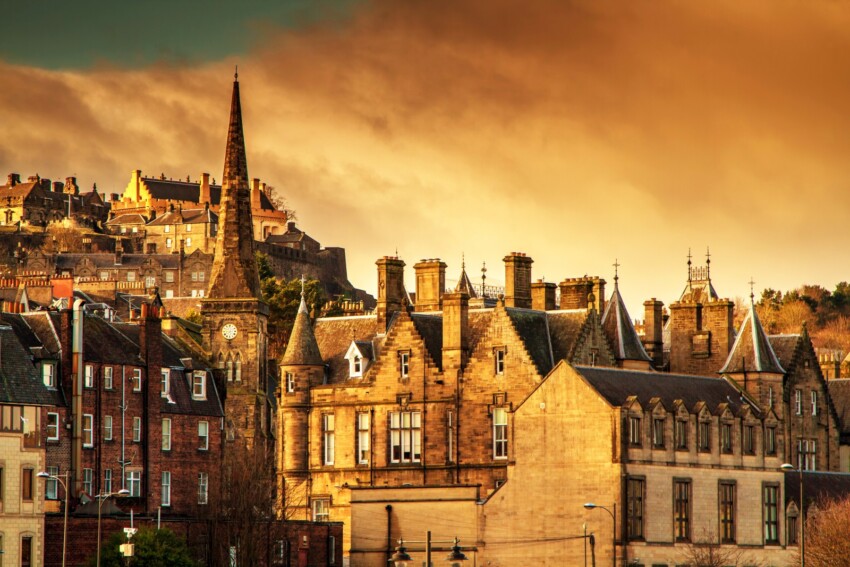
Staying in Stirling’s historic centre is the best option for visitors. This pedestrianised area, with its cobbled streets, is dominated by the imposing Stirling Castle and is perfect for those wanting to explore the main historical attractions on foot.
Accommodation in this area is predominantly made up of boutique hotels housed in historic buildings, charming bed & breakfasts and serviced apartments with castle views. The central location guarantees easy access to the best restaurants, traditional pubs and artisan shops. Whilst prices are slightly higher than in other areas, the privilege of waking up in the heart of the medieval town and being able to stroll along Stirling’s Royal Mile at sunset when the tourist crowds have departed more than justifies the expense.
Stirling enjoys a strategic location in the heart of Scotland, situated midway between Edinburgh and Glasgow. This central position makes it easily accessible from anywhere in the United Kingdom and Europe. The town sits at the intersection of major transport routes, served by both the M9 (which connects Edinburgh) and the M80 (towards Glasgow).
Stirling is served by a main railway station on the Edinburgh–Glasgow line, with excellent connections to Scotland’s and Britain’s major towns and cities:
Stirling railway station is only a 10-minute walk from the historic centre and castle, making the train one of the most convenient options for visiting the town.
If you’re travelling by car, Stirling is easily accessible in around 50 minutes from Edinburgh and 30 minutes from Glasgow.
The town has several paid car parks in the centre, although during peak season finding a space can be difficult. A convenient option is the Springkerse Park and Ride, from where frequent buses will take you into the centre in just a few minutes.
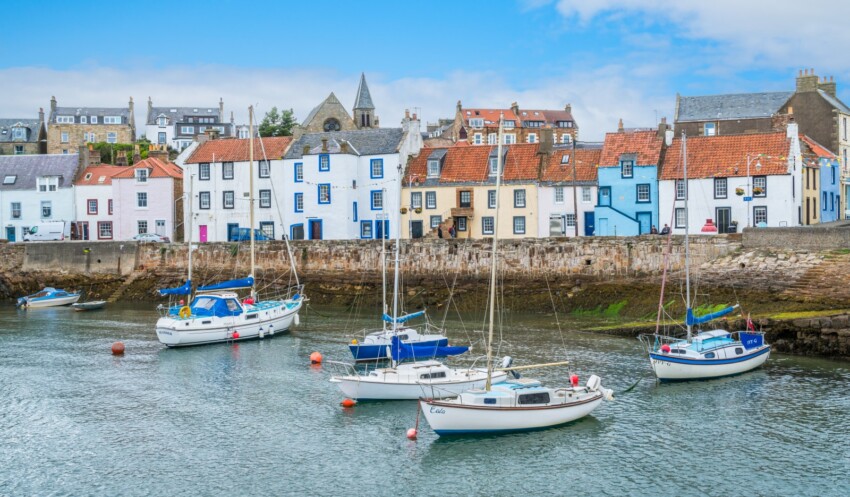
Stirling’s strategic location makes it an ideal base for exploring some of central Scotland’s most spectacular and historically significant areas. With a car hire, you can easily reach national parks, castles and picturesque villages within short distances. We recommend dedicating at least a couple of days to exploring the surrounding area, where pristine nature and history merge in landscapes of extraordinary beauty.
Just 10 km from Stirling stands the magnificent Doune Castle, a 14th-century medieval fortress made famous by numerous film and television productions, including “Monty Python and the Holy Grail”, “Outlander” (where it appears as Castle Leoch) and “Game of Thrones” (in the pilot episodes). This extraordinarily well-preserved castle offers an authentic immersion into late medieval Scottish military and domestic architecture.
Built for Scotland’s Regent Robert Stewart, Duke of Albany, the castle is renowned for its imposing 30-metre high gatehouse tower and its Great Hall, one of Scotland’s best-preserved examples, with its magnificent timber barrel vault ceiling. The audioguide, narrated by Monty Python’s Terry Jones, adds a touch of humour to your visit as you explore the kitchens, ducal apartments and formidable fortifications.
The surrounding gardens and banks of the River Teith offer pleasant walks and are perfect for a picnic on fine days. The nearby village of Doune, with its traditional pubs, is ideal for refreshments after your castle visit.
The Fife region, around an hour’s drive from Stirling, offers a fascinating route through charming fishing villages.
The jewel of the region is undoubtedly St Andrews, a world-renowned university town and “home of golf”. Here you can visit the evocative ruins of the medieval cathedral, once Scotland’s largest church, and the famous Old Course, the world’s oldest golf course where the game has been played since the 15th century. St Andrews Castle, with its dungeons and underground prisons, offers a fascinating glimpse into the town’s turbulent history.
Along the eastern coast of Fife winds the enchanting East Neuk, a sequence of fishing villages with timeless charm. Places such as Crail, Anstruther, Pittenweem, Saint Monans and Elie welcome you with their picturesque harbours, traditional red-roofed houses and excellent fresh seafood cuisine. The Fife Coastal Path, a 183 km trail that follows the entire perimeter of the peninsula, is perfect for scenic walks with breathtaking views over the North Sea.
The Loch Lomond and The Trossachs National Park is just 30 minutes’ drive from Stirling and offers some of Scotland’s most spectacular landscapes. This vast national park is characterised by majestic mountains, ancient forests and over 22 lochs, including Loch Lomond, Britain’s largest freshwater lake.
The area is a paradise for outdoor enthusiasts, with countless trails for hikes of every difficulty level. The West Highland Way, one of Scotland’s most famous hiking routes, traverses the western part of the park. For breathtaking panoramic views, don’t miss the climb up Ben A’an, a relatively easy mountain to ascend that offers spectacular views over Loch Katrine.
Water sports enthusiasts can enjoy canoeing, kayaking or paddleboarding on one of the numerous lochs, whilst cyclists will appreciate the dedicated paths that cross varied landscapes. The picturesque village of Callander, considered the park’s eastern gateway, is perfect for a stop with its welcoming cafés and local shops.
What's the weather at Stirling? Below are the temperatures and the weather forecast at Stirling for the next few days.
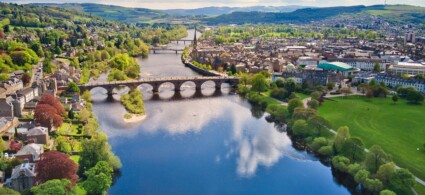
Stirling lies just 40 km north-east of Glasgow and 60 km north-west of Edinburgh, on the banks of the River Forth.
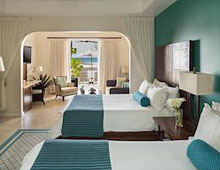 Hotel
Hotel 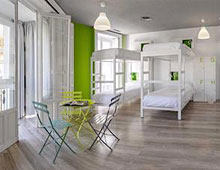 Budget accommodations
 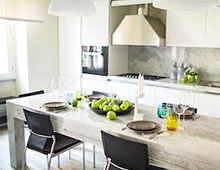 Apartments
  Family Hotel
  Luxury Hotel