Edinburgh: Loch Ness, Glencoe & the Scottish Highlands Tour
19.554 reviews
Buy now
From 81,59€ per person
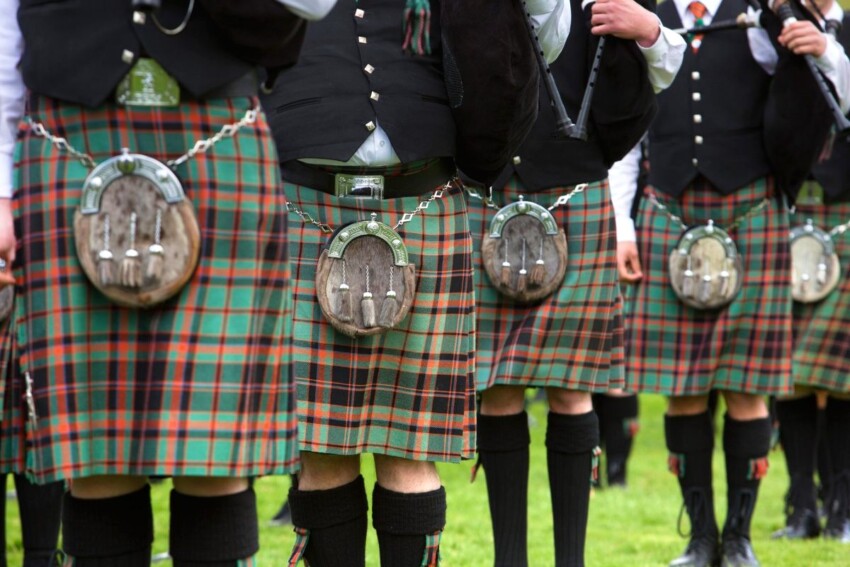
Today it is merely a curiosity for tourists visiting Scotland, but once, belonging to a clan was a matter of vital importance—familial, cultural, and military alike.
As you traverse the magnificent glens of the Scottish Highlands, between heather-covered moors draped in purple and windswept mountains, it is easy to imagine how these wild territories shaped the social organisation of those who inhabited them for centuries. The Scottish clans represent one of the most fascinating and iconic elements of Highland culture, a social system that forged Scotland’s history and continues to exert a powerful emotional pull for millions of people worldwide who claim Scottish ancestry.
The term “clan” derives from Scottish Gaelic “clann“, which literally means “children” or “descendants”. This etymology reveals the very essence of the clan concept: a group of people united by bonds of real or presumed kinship, who recognise the authority of a common leader.
Scottish clans developed primarily in the Highlands and islands of Scotland from the 12th century onwards, in a geographical context characterised by isolated glens and difficult communication that favoured the formation of autonomous communities. Each clan controlled a specific territory, governed by a chief whose authority was generally hereditary.
Contrary to what one might assume, not all clan members necessarily shared the same surname or were connected by blood ties. Rather, the clan was a social and economic unit, which included:
This structure created a network of mutual protection and support, essential for survival in a hostile environment and an era of frequent conflict. Clan members were bound by strong ties of loyalty to their chief, who in turn had the obligation to protect and support his followers.
This social structure, parallel to feudal nobility, represented an alternative system of power, often in conflict with the authority of the Scottish crown and, later, the British crown.
The history of Scottish clans is complex and is deeply interwoven with Scotland’s broader history.
The first documented mentions of clans as organised entities date to the 12th century, although their roots extend into older social structures. The Gaelic society of the Highlands developed in relative isolation, preserving Celtic traditions and creating a social system suited to the difficult mountain environment.
Primitive clans formed around local leader figures who guaranteed protection in exchange for loyalty. These early chiefs established the dynasties that would guide the clans in the centuries to follow.
The period between the 14th and 16th centuries can be considered the golden age of the clan system. During this time, clans consolidated their power and structure, creating veritable semi-independent “mini-states” in the Highlands.
Some clans became particularly powerful, such as the MacDonald, Lords of the Isles, who governed a territory so vast as to rival the Scottish crown itself, or the Campbell, who through shrewd alliances with the monarchy gradually extended their dominion.
It was during this period that many of the traditions associated with clans developed, from tartans to mottoes, from crests to pipe marches (bagpipe melodies specific to each clan).
The clan system began to come under significant pressure from the 17th century, when the Scottish crown, and subsequently the British crown after the 1707 Union, sought to extend its control over the Highlands.
The Statutes of Iona of 1609 represented one of the first systematic attempts to “civilise” clan chiefs, requiring them to send their heirs to study in the Lowlands or England and imposing restrictions on their traditional activities.
The decisive blow to the clan system came after the Battle of Culloden in 1746, which marked the final defeat of the Jacobite rebellion led by Charles Edward Stuart (Bonnie Prince Charlie). The repression that followed was brutal:
These measures, combined with economic changes such as the Highland Clearances of the 18th and 19th centuries (when many landowners, including former clan chiefs, expelled tenant farmers from their lands to make way for sheep farming), led to the disintegration of the traditional clan social system.
Ironically, precisely as the clan system as a social organisation was disappearing, cultural and romantic interest in clans and Highland traditions began to grow. This phenomenon, sometimes called “tartanry“, was fuelled by literary works such as those of Sir Walter Scott and reached its peak with the visit of King George IV to Scotland in 1822, organised by Scott himself.
During this visit, considered the first official royal tour of Scotland in nearly two centuries, clans were invited to present themselves in traditional dress (although many of the tartans and “traditions” exhibited on that occasion were actually recent inventions).
This romantic revival established many of the modern ideas about clans and created renewed interest in clan genealogies that continues to the present day.
The social structure within a clan was hierarchical but displayed distinctive characteristics compared to classical European feudalism.
At the apex of the hierarchy stood the clan chief, a figure who combined several roles:
The position of clan chief was generally hereditary, transmitted according to the principle of tanistry, a system of succession in which the chief designated his successor (tanist) from among qualified male members of his extended family. This system allowed for the selection of the most capable candidate, not necessarily the eldest son.
A fundamental concept in clan culture was the dùthchas, a Gaelic term difficult to translate that expresses the profound bond between the clan, its chief, and ancestral territory. This concept went beyond simple legal ownership of the land (which in legal terms was called oighreachd): it represented a customary right based on immemorial occupation of a territory and an almost spiritual connection to it.
Below the clan chief were the tacksmen (in Gaelic fear-taic, literally “man of support”), often the chief’s relatives who were granted the management of portions of land. These intermediaries sublet the land to ordinary clan members, collected tributes and rents, and in times of war organised men for combat.
The majority of clan members were farmers and herders who worked the land. In traditional Highland society, wealth was measured primarily in livestock, particularly cattle, which not only provided sustenance but were also objects of raids between rival clans, a practice known as “cattle reiving” that was considered a legitimate economic activity and a way to demonstrate courage and skill.
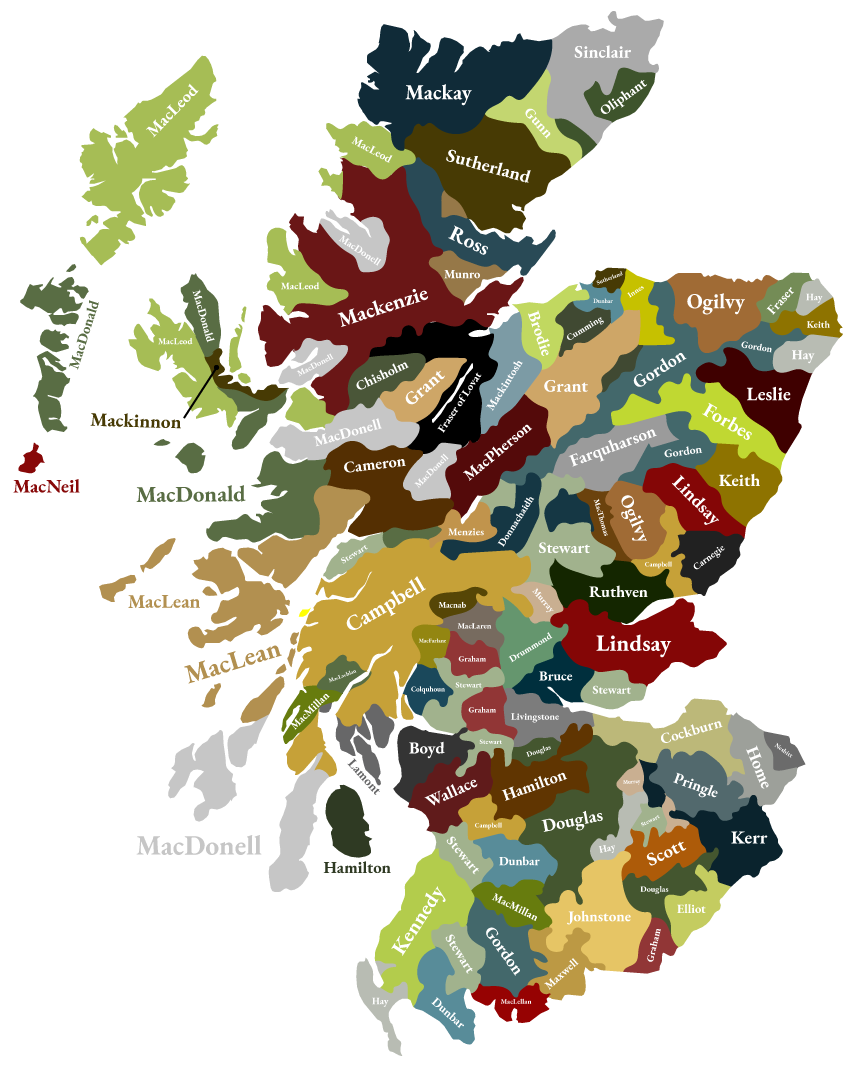
Known as the “Lords of the Isles“, the MacDonalds were one of the most powerful dynasties of the Highlands and the Hebrides. At the height of their power, in the 15th century, they controlled a vast territory that included much of the western Highlands and the islands, ruling as semi-independent princes.
Their ancestral territory encompassed the island of Skye, home to Dunvegan Castle, seat of Clan MacLeod but theatre of numerous clashes with the MacDonalds. Their motto was “Per mare per terras” (By sea and by land).
The Campbell were among the most powerful and controversial clans. Through skilful political manoeuvring and alliances with the crown, they extended their dominion from Argyll across much of the western Highlands.
Their rise often came at the expense of other clans, which made them deeply unpopular in many parts of the Highlands. The Massacre of Glencoe in 1692, when the Campbell slaughtered their MacDonald guests, remains one of the most infamous episodes in clan history.
At Inveraray Castle, the current seat of the Campbell clan chief, you can admire the impressive collection of weapons and artefacts that attest to their historical influence.
Divided into two main branches (MacLeod of Lewis and MacLeod of Harris and Dunvegan), this clan maintained control of vast areas in the Hebrides for centuries. Dunvegan Castle on the island of Skye has been the seat of the clan continuously for 800 years, a world record for a residence continuously inhabited by the same family.
Here precious clan relics are preserved, such as the legendary “Fairy Flag“, an ancient silk standard which according to tradition possesses magical powers and is said to have been given to the clan by a fairy.
The Fraser, whose motto is “Je suis prest” (I am ready), played a significant role in Scottish history. Divided into two main branches, the Fraser of Lovat in the Highlands and the Fraser of the Lowlands, the clan has been immortalised recently in the popular series “Outlander”.
A powerful clan of north-east Scotland, the Gordon controlled vast areas of Aberdeenshire and Moray. Known as the “Cock o’ the North“, the Gordon were loyal supporters of the Stuart dynasty and played crucial roles in many Scottish historical events.
Their principal seat, Gordon Castle near Fochabers, in the Aberdeen area, is today partially restored and open to the public.
The Stewart (or Stuart in the Francicised version) were not merely a powerful clan but also the royal family that governed Scotland from 1371 to 1707 and all of Great Britain until 1714. The main branch of the royal family became extinct, but several clans descended from the Stewart continue to exist.
At Stirling Castle, one of the most important royal residences of the Stuart dynasty, you can immerse yourself in the history of this lineage that profoundly marked not only Scotland but all of Europe.
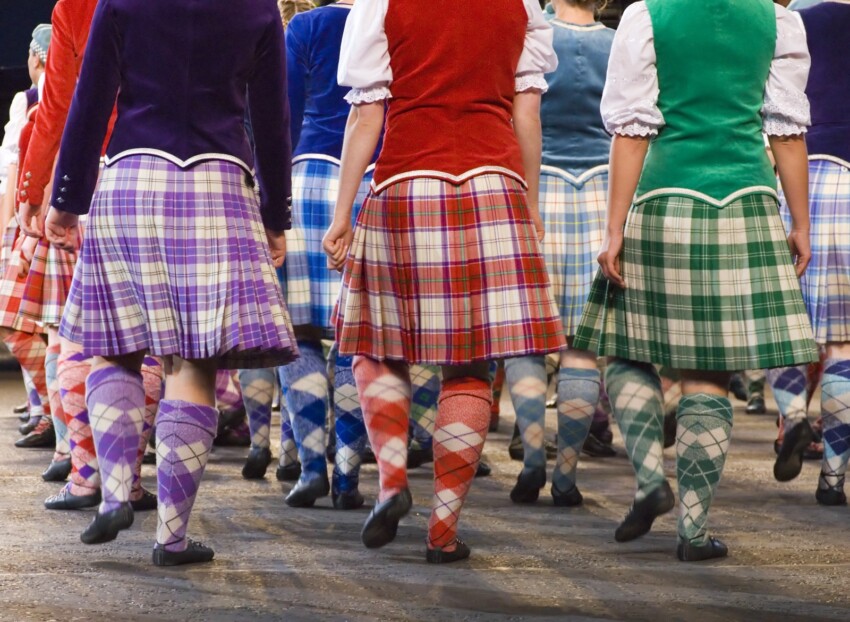
Scottish clans developed a rich system of symbols and traditions that served to reinforce group identity and distinguish one clan from another. During a visit to the Clan Museum in Edinburgh, you can learn many fascinating details about these cultural elements.
Tartan is arguably the most recognisable symbol associated with Scottish clans. These distinctive woven patterns, composed of coloured stripes intersecting at right angles, became emblems of clan identity particularly from the 19th century onwards.
It’s worth noting that the rigid association between specific tartans and individual clans is largely a modern invention. Historically, patterns were more closely linked to geographical regions than to specific clans, and the precise identification of “clan tartans” developed primarily during the romantic revival of Highland traditions in the 19th century.
The crest badge is a symbol that clan members could wear to display their affiliation. It consists of a representation of the clan chief’s personal emblem, surrounded by a belt with a buckle bearing the clan motto.
Unlike tartan, which historically could vary, the crest badge was an official and regulated symbol of clan membership.
The plant badge was an even older symbol: a specific plant that clan members wore on their hats or bonnets as a mark of recognition, particularly in battle. For example, Clan MacDonald used heather, whilst the Campbells were associated with myrtle.
Armorial bearings were reserved for clan chiefs and members of the nobility within the clan. The Scottish heraldic system, overseen by the Lord Lyon King of Arms, is one of the most rigorous and regulated in the world and continues to function as a legal court on heraldic matters.
Clan gatherings were occasions when all members would assemble, traditionally to prepare for war or for important celebrations. This tradition has been revitalised in modern times through the Highland Games and international clan gatherings, where people from across the globe sharing the same surname come together to celebrate their shared heritage.
If you visit Braemar Gathering, one of the oldest and most prestigious Highland Games, you can witness the parade of clans with their standards and tartans, a tradition renewed for centuries.
Every clan had its own sluagh-ghairm, a war cry in Gaelic that served as a rallying point in battle and as a means of instilling courage in warriors and terror in enemies. Some famous clan slogans include “Cruachan!” of the Campbells (named after a mountain in their territory) and “Loch Sloy!” of the MacFarlanes.
The bagpipe holds a special place in clan traditions. Every major clan had its own pipers (pìobairean) who composed and performed pieces specific to the clan.
Piobaireachd (or ceol mor, “great music”) is the classical form of bagpipe music, featuring complex compositions that commemorate significant events in clan history, such as battles, the deaths of important chiefs or celebrations.
You can hear some of these ancient compositions at the College of Piping in Glasgow, passed down orally through generations before being transcribed into musical notation.
Although the clan system as a social and political organisation has long since disappeared, its cultural legacy remains vital and continues to evolve.
Surprisingly, the clan chief system continues to exist, albeit with a very different role from the past. The Lord Lyon King of Arms, Scotland’s foremost heraldic authority, officially recognises clan chiefs and maintains a register of those currently acknowledged.
Modern chiefs no longer wield political or military power, but they play an important cultural and ceremonial role. Many are actively involved in preserving clan traditions, managing clan societies and organising international gatherings.
Some chiefs still reside in their ancestral clan seats, which are often open to the public as tourist attractions.
The Scottish diaspora, resulting from the Highland Clearances and economic migration, dispersed the clan heritage around the world, particularly to North America, Australia and New Zealand.
Today, numerous clan societies in these countries keep traditions alive and help people with Scottish roots rediscover their heritage. These organisations arrange events, gatherings, genealogical research and historical preservation projects.
The Internet has further facilitated this global connection, enabling people sharing the same surname or clan ties to connect through forums, genealogical databases and dedicated social media.
Interest in Scottish clans constitutes a significant component of tourism in Scotland. Castles, battlefields, clan museums and genealogical centres attract visitors from around the world keen to discover their own roots or simply fascinated by the rich history of the clan system.
Recent popular culture works such as the “Outlander” book and television series have further stimulated this interest, introducing new generations to the complex and often romanticised history of the clan system.
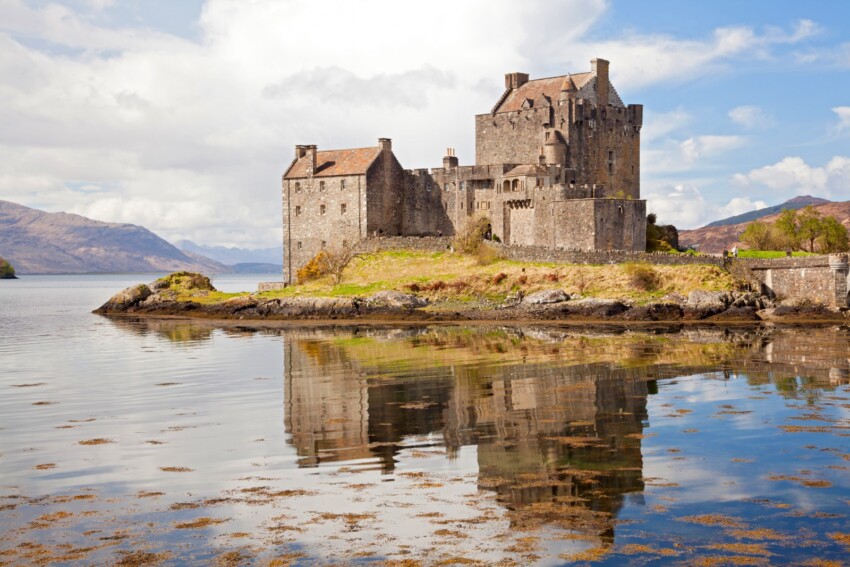
If you’re interested in exploring the clan heritage during a trip to Scotland, here are some significant places we recommend:
Many visitors to Scotland are curious to discover any connections to Scottish clans. Here are some useful resources:
During your visit to Scotland, you can visit specialist centres such as:
Modern DNA testing can offer interesting insights into your geographic and ethnic origins, though it’s important to remember that these tests have limitations when it comes to identifying specific clan connections, as clans were not necessarily genetically homogenous groups.
 Hotel
Hotel  Budget accommodations
  Apartments
  Family Hotel
  Luxury Hotel