Edinburgh: Loch Ness, Glencoe & the Scottish Highlands Tour
18.051 reviews
Buy now
From 76,03€ per person
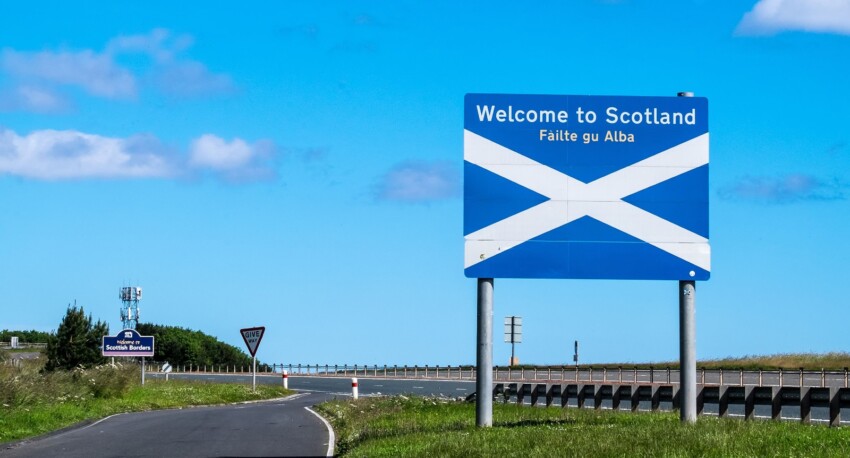
Throughout Scotland, people speak English, which is the country’s official language. However, as in other regions of Great Britain, it is spoken with distinctly marked regional accents and idiomatic expressions. Scotland is actually a country with three officially recognised languages: Scottish English, Scots, and Scottish Gaelic, each with its own history and geography.
Scottish English (Scots) derives from a variant of Lowland Scots and varies greatly from area to area: from a slight accent in the pronunciation of certain words and expressions, to the heavy dialect of Glasgow and north-western Aberdeenshire. Scots is not simply an accent: it is a language in its own right of Germanic origin, related to English in the same way that Dutch is to German, and is officially recognised as a minority language in Scotland, the United Kingdom and Europe under the European Charter for Regional or Minority Languages of 2001. According to the 2011 census, approximately 1.5 million Scottish people claim to speak it or understand it.
The Scottish language has its own literary and poetic traditions — Robert Burns (1759-1796) is its greatest exponent — and a rich tradition of songs, including the Border ballads. However, it was not until 1983 that the New Testament was published in Scots for the first time, a work by scholar William Laughton Lorimer (1885-1967).
Scots is subdivided into several regional dialects: Central Scots, spoken in the Glasgow and Edinburgh areas, is the most widespread; Northern Scots or Doric is typical of the north-east, especially in Aberdeen, and has such a distinctive sound that it seems almost like a separate language even to Scots themselves; Island Scots is spoken in Orkney and Shetland, with strong Scandinavian influence; Southern Scots characterises the border areas with England.
In the Western Isles you will hear yet another accent, which is sometimes described as soft and melodic. This is the legacy of a language in its own right: Gaelic (pronounced Gaalic in Scotland), a Celtic language of the Goidelic group related to Irish, still spoken by approximately 70,000 people. Since 2006, following the Gaelic Language (Scotland) Act of 2005, Gaelic has been an official language of Scotland in every sense.
Travellers unfamiliar with Gaelic will likely encounter it for the first time on bilingual road signs in the western region and on maps, particularly for mountain names. You may hear it spoken in the Western Isles, used spontaneously as a first language by local people, or during a religious service, or even in songs. If you see the words ceud mile failte, remember it means a warm welcome.
Gaelic was the main language of northern and western Scotland until the radical changes of the 18th century, caused by the opening up of the Highlands following the Jacobite rebellions and the forced abandonment of land — the so-called Highland Clearances — which uprooted entire farming communities. In the 20th century, whilst Gaelic remained the language spoken at home, English was imposed as the official language in schools and universities, bringing the language to the brink of extinction.
A revival of interest in the 1970s — encouraged by Wales’s campaign to promote the Welsh language — and subsequent official recognition halted its decline. With the recent interest in Scottish autonomous identity, Gaelic is today the subject of active protective policies: it is taught in schools and universities, Gaelic culture is celebrated at the annual Mòd festival, books and newspapers are published in Gaelic, and radio and television programmes are broadcast. Nearly half of the Gaelic-speaking population now lives in the Lowlands, including Glasgow and Edinburgh, where an Edinburgh Gaelic Trail is active.
The main institutional resources for those wishing to delve deeper:
In Orkney and Shetland, you will hear a completely different accent, with very long “a”s and many unusual words influenced by Nordic languages: when spoken strongly among local people, it sounds more like Danish than English. This accent is the legacy of Norn, the Norse language spoken by Norwegian Vikings who colonised the islands from the 9th century onwards and which remained in use until the 18th century. The two island groups belonged to Norway until 1468 — when they were ceded to Scotland as a pledge for the never-paid dowry of the Danish princess Margaret — and the cultural bond with Scandinavia remains alive and perceptible to this day.
 Hotel
Hotel  Budget accommodations
  Apartments
  Family Hotel
  Luxury Hotel