Edinburgh: Loch Ness, Glencoe & the Scottish Highlands Tour
18.051 reviews
Buy now
From 76,03€ per person
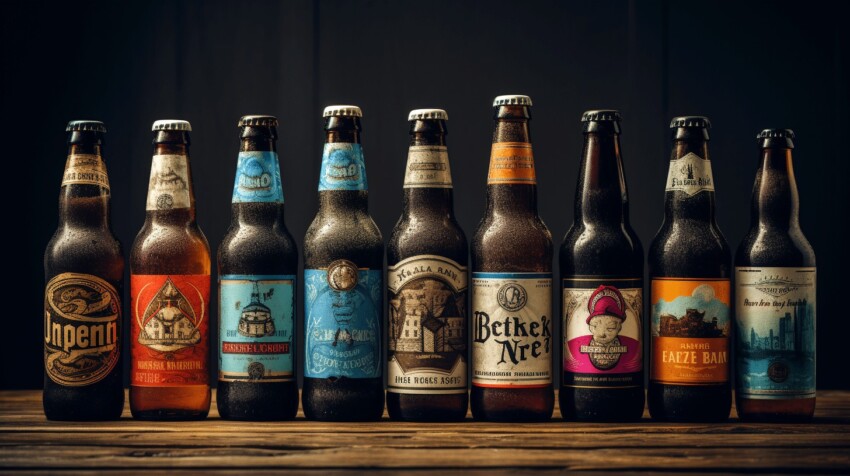
Scotland is renowned worldwide for whisky, but those who focus solely on distillation miss half the story. Scottish brewing tradition is ancient, deeply rooted and surprisingly diverse: it spans centuries of history, harsh climate and local ingredients that have shaped entirely original styles, distinct from their English counterparts and far removed from British pub stereotypes. Today, Scotland ranks among Europe’s most vibrant regions for craft beer production, with over 150 active breweries spread across the Highlands, islands and cities.
Understanding Scottish beer means first shedding a common misconception: it’s not simply about dark, heavy brews suited to winter months. Alongside classic Scottish Heavy and robust Wee Heavy varieties, there are floral pale ales, crisp lagers, peat-smoked beers and experimental brews that blend ancient techniques with local ingredients such as heather, seaweed and whisky. It’s a tradition that deserves to be explored glass by glass.
During the 1960s and 1970s, innovation in the Scottish brewing industry was hampered by a series of mergers and acquisitions. Scottish Courage bears particular responsibility, but Bass and Carlsberg-Tetley also successfully acquired several Scottish breweries. Edinburgh, once one of the most thriving brewing centres, is only now showing signs of recovery: in recent years, innovative small breweries have begun to emerge.
The most distinctive feature of Scottish brewing is its own classification system, still in use today on pub and brewery menus. In the Victorian era, beers were taxed — and therefore named — based on the price per barrel, expressed in shillings. This convention created a nomenclature that still identifies the strength and body of beer today.
60 Shilling (60/-) is the lightest beer in the Scottish family, with an alcohol content around 3.5%. It’s a session beer, lightly bitter, subtly malted, ideal for a long evening. 70 Shilling (70/-), also known as Heavy, sits in the mid-range at approximately 3.5-4% alcohol with a more pronounced malty profile and caramel notes that make it the most common pub beer across Scotland. 80 Shilling (80/-), called Export, is fuller-bodied and stronger (4-5.5%), with toasted notes and balanced sweetness that in some ways resembles English best bitter, whilst maintaining a distinct character.
At the top of the system sits the legendary Wee Heavy, the 90 Shilling (90/-): a strong beer, often between 6.5% and 10% alcohol, with a dense body, aromas of dried fruit, burnt caramel and sometimes a subtle peatiness reminiscent of malt whisky. It’s a contemplative beer, consumed in small quantities — hence the name “wee“, meaning small — and perhaps the finest expression of Scottish brewing identity.
Belhaven Brewery, founded in Dunbar in 1719, is one of Scotland’s oldest breweries still in operation. Its Best, an 80 Shilling amber-coloured beer with honey and toffee notes, is considered by many to be the quintessential Scottish beer. Robert Louis Stevenson called it “the finest barley beer in the world” — a judgment perhaps not to be taken literally, but one that hints at its historic reputation.
Traquair House Brewery, located within Scotland’s oldest continuously inhabited castle (in the Borders), produces beers in oak using methods unchanged since the 18th century. Traquair House Ale, a dark and complex Wee Heavy, is distributed worldwide and represents an authentic bridge between historic brewing and the contemporary market.
On the modern craft front, BrewDog — founded in Ellon, Aberdeenshire, in 2007 — has transformed perceptions of Scottish beer on the global stage. With its Punk IPA, which became one of Europe’s best-selling craft beers, it proved that Scotland could compete in the hoppy beer segment, helping to inspire a generation of new breweries across the country.
In Orkney, Orkney Brewery produces the celebrated Dark Island, a dark and velvety beer with dark chocolate and coffee notes, and Skullsplitter, an 8.5% Wee Heavy named after an ancient Viking of the islands. In these brews you can sense the profound connection between remote territory and the beers born there: robust, characterful, built to withstand Atlantic winters.
In Edinburgh, the beer scene is concentrated in the Old Town and the Leith district, where venues like the Bow Bar on Victoria Street maintain a selection of real ales in cask — unfiltered, unpasteurised beers served at room temperature and hand-pulled — which represent the most authentic way to drink beer in Scotland. Edinburgh’s traditional pubs often retain their original Victorian architecture, with intricately carved wooden panelling and brass counters that make the experience as much visual as it is gustatory.
In Glasgow, beer culture is more down-to-earth and less touristy: the locals’ bars in the West End and Finnieston offer the chance to drink alongside residents, often with a football match or live music in the background. Drygate Brewery, in the heart of the city, is both a working brewery and a public-facing venue where you can watch production whilst drinking straight from the source.
For those driving through the Highlands, many village pubs like Inveraray, Pitlochry and Fort William serve local beers you won’t find elsewhere: small-batch productions tied to a specific place, varying with the seasons. Stopping at these locations isn’t merely a refreshing pause — it’s one of the best ways to understand Scotland.
 Hotel
Hotel  Budget accommodations
  Apartments
  Family Hotel
  Luxury Hotel