Edinburgh: Loch Ness, Glencoe & the Scottish Highlands Tour
18.051 reviews
Buy now
From 76,03€ per person
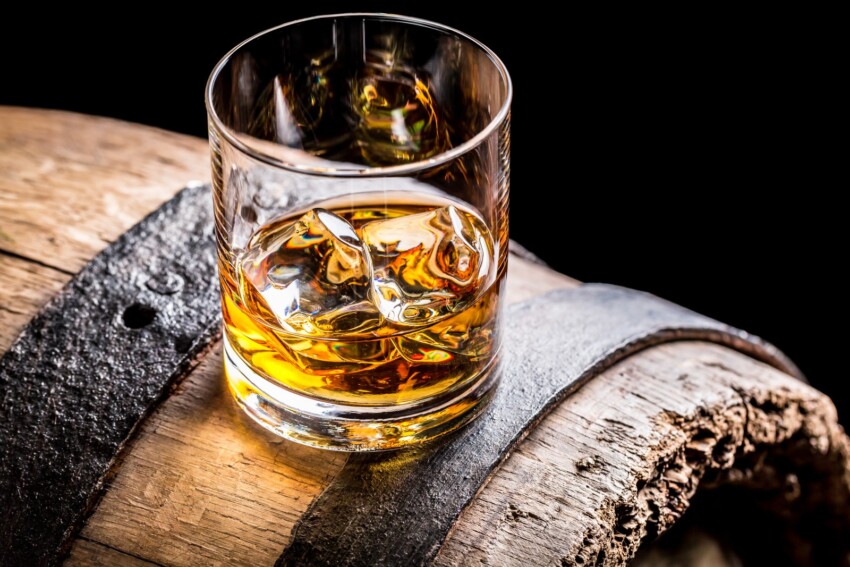
The origins of whisky distillation are unknown. However, it is believed that distillation began in China around 2000 BC before spreading throughout the world.
What is certain is that in the early centuries of the Christian era, the Arab people were among the first to develop the science of distillation, using its derivatives for the preparation of cosmetics. The terms “alcohol” and “alembic” are indeed derived from the Arabic language. The first notions reached Europe from the Holy Land through Benedictine monks who accompanied the Crusades (around the year 1100).
The religious communities discovered the secret of distillation from Arabic manuscripts and passed this knowledge on to their fellow monks in European monasteries. It is therefore presumed that the first distillation of barley beer occurred in the British Isles in the 12th century, though it remains unclear whether this happened first in Ireland or Scotland.
Both nations claim the distinction of producing the finest whisky, however Irish whiskey and Scottish whisky are two different types that differ not only in the spelling of the name, but also in their production methods and taste.
Irish whiskey is produced using a three-stage distillation process, whilst Scottish whisky uses only two stages. The result is that Irish whiskey is smoother, more fruity and delicate, whereas Scottish whisky is more robust, peaty and complex.
In both cases, the term whisky derives from the Gaelic “uisge beatha“, which means water of life.
Scotch whisky refers to whisky produced in Scotland. The definition “scotch whisky” has been legally protected since 1988 and defines a whisky that has the following characteristics:
The Scotch Whisky Act of 1988 also prohibits the production of whisky in Scotland that is not scotch.
Scotch whisky is produced and distilled in isolated and wild locations, usually in open countryside or on the shores of lochs and streams, and acquires different characteristics depending on the region of production. The current production regions for Scotch Whisky are the Highlands, Islands, Speyside, Islay, Campbeltown and Lowlands.
In Scotland there are 92 active whisky distilleries, but those that produce single malt are fewer, as many distilleries prefer to dedicate their production to blended whisky – that is, whiskies created by blending different single malts, which may also have been produced and matured in different regions.
Below is a selection of the most renowned and appreciated Scottish whiskies, famous worldwide for their characteristics. Please note, this is not a ranking.
This is the oldest type and is produced by individual distilleries and bottled as such. The ingredients used are pure malted barley, water and yeast. The barley is in many cases smoked with peat fire during the final stage of malting. The intensity of the smoke determines how peaty the whisky is.
Only traditional copper pot stills (batch distillation method) with double distillation are used. Only one Scottish malt distillery distils its product three times. The minimum age of maturation in used oak barrels is normally indicated on the label.
A blend of various malt whiskies from different distilleries.
Malt whisky from a single vintage.
Produced using grains such as unmalted wheat in a continuous column still in a single distillation. The majority of this whisky is used in blended whisky. Only small quantities are bottled as single grain. It is not peaty. The age is normally indicated on the label.
The most common scotch whisky is produced by blending some grain whiskies with various malt whiskies from distilleries in different regions of Scotland. Standard quality does not indicate the age on the label, which must exceed three years of maturation in oak barrels.
Matured for a long period in oak barrels (the minimum age is declared on the label). Like all “blended” whiskies, it is composed of grain whisky and malt whisky.
In Scotland, used barrels from the United States (where they matured bourbon) and from Spain (where they aged sherry) are used.
Sooner or later, any newcomer to whisky will ask themselves the question: what is the best way to drink Scottish whisky? It is indeed well known that many add water, others alternate a sip of whisky with a sip of water, whilst others drink their whisky with two ice cubes.
There are various schools of thought, but in reality there is a close relationship between whisky and water/ice.
The most iconic and cinematic way sees whisky paired with two ice cubes. In reality, it is the least correct method and we shall see why immediately.
The simplest way and for many the only one – whisky at room temperature and nothing else. But you may be surprised to learn that this is not actually the best way, because at room temperature the evaporation of alcohol is the first thing you perceive, both on the nose and on the palate, masking much of the aromas contained in the malt.
Many people believe that the best way to drink a fine Scottish whisky is to have two glasses: one with neat whisky and one with fresh water.
You should then alternate a sip of whisky with a sip of water, making sure to pass the water across your palate so as to reduce the numbing effect of alcohol and revitalise your taste receptors, preparing them for another sip of whisky.
To some this might seem odd, but in Scotland adding a splash of water to whisky is the preferred method of true connoisseurs.
Whisky contains certain substances that bind with water and others that repel it, including a component called guaiacol, which contains all the aromatic molecules responsible for the taste of the malt.
Guaiacol binds to ethanol – that is, alcohol – and repels water. Consequently, by adding water to whisky, the guaiacol rises to the surface, releasing all the aromatic components and thus increasing the aroma and flavour of the whisky.
Conversely, by increasing the ethanol content – think of full proof whiskies (cask strength) bottled at alcoholic strengths that can reach around 80 degrees – the guaiacol at the surface is considerably less, as by binding to the alcohol which attracts it far more than water, it remains at the bottom of the glass, thus limiting the whisky’s potential.
So we know with absolute certainty that adding a few drops of water to whisky improves its characteristics – nothing that the Scottish hadn’t already intuited centuries ago. After all, Scotland remains the home of scotch whisky.
Although malting can be applied to all cereals, this expensive process typically uses only selected barley, chosen for its inherent characteristics and suitability.
Barley, one of the earliest cereals cultivated by mankind, can be grown in many regions across the globe. However, given its ability to mature early in temperate, humid climates with long daylight hours, it thrives naturally in Scottish lands.
In Scotland, during summer, the average temperature is 14–15°C with high humidity caused by frequent rainfall. At this latitude, sunlight in June and July extends for around 20 hours daily. Harvests are therefore abundant and barley quality is excellent. The grain consists of two distinct parts: the embryo, a living structure where germination begins, and the endosperm, composed of cells containing complex carbohydrates (insoluble starches). To extract these starches and make them usable, the barley must undergo metamorphosis during germination. This is when enzymes act like chemical scissors, breaking down the cell walls.
This makes insoluble starches available, which enzymes then transform into soluble starches or simple sugars. Barley is the ideal cereal choice both because of the high-quality production that occurs in Scotland and because barley has a natural aptitude for germination, producing abundant enzymes. Man intervenes by aiding nature’s awakening—that is, germination.
The selected barley, drawn from silos, cleaned and weighed, has low moisture content (no more than 12%). It is conveyed into large tanks containing water at 14°C, where it remains submerged for varying periods with repeated complete water changes. After approximately 48 hours, the grains are saturated and have reached the desired moisture level of at least 47%—the ideal condition to awaken the embryo to new life.
The barley is separated from the water and collected in suitable vessels for its transformation under careful human observation. Germination must develop only within the grain and be halted before the new plant emerges. After five or six days, maximum conversion of starches from insoluble to soluble is achieved, and the barley is sent to hot-air kilns. The grains are dried and germination is simultaneously stopped, producing malted barley.
In Scotland, most distilleries employ an additional process: during the final stage of malting, beyond hot air, the barley is exposed to heavy, rich, pungent and penetrating smoke produced by burning peat. This smoke impregnates the malted barley, giving it aroma and a peaty flavour that we find, to varying degrees, in the final product.
The malted barley is ground coarsely and steeped, for a set period, in hot water. Water is of fundamental importance for grain distillation. This is why, centuries ago, those who built Scottish malt distilleries ensured they had access to a particular water source.
In most cases, the same water is still used today to distil that specific malt whisky. The composition of water tables, subsurface geology and terrain through which the water flows varies.
All these elements make the water particular and unique, and in turn, contribute to making the whisky derived from it different and distinctive. The soluble starches in malted barley dissolve when in contact with hot water. Enzymes intervene once more to convert the starches into maltose sugar. Following separation from solid matter, a sweet liquid—the wort—is obtained, ready for the next stage.
The wort, combined with a solution of water and yeast, is conveyed into large wooden vats, concrete vessels, or more recently, stainless steel tanks.
The selected yeasts, cultured in laboratories, are maintained at low temperature in sterile containers to prevent any possible bacterial contamination.
Some distilleries also use live yeasts harvested from the “skimming” of beer during fermentation. Yeasts act on the sugars, converting them into carbon dioxide, which escapes into the air, and into alcohol.
This phase lasts anywhere from a minimum of 48 hours to a maximum of 112 hours, with alcohol content between 6 and 9 per cent by volume.
The malted barley is distilled in copper stills according to the traditional batch method. To achieve optimal results, a double distillation is required. The shape of the stills varies according to the stillmaker’s choice and requirements. Each still is a unique piece that contributes to producing unique whisky. The distillation stages are carefully monitored by the Master Distiller, who feeds the fermented product into a first still, which is heated via a coil tube (containing steam) placed inside the still itself. Alcohol evaporates at a temperature below 100°C (the boiling point of water). Therefore, the alcohols are the first to evaporate.
The purpose of the first distillation is to separate as much alcohol as possible, along with other elements such as acids, esters, aldehydes, terpenes and so on, leaving most of the water in the still. This is possible only if the liquid temperature is maintained below 100°C.
Alcohols, being lighter than water, evaporate, carrying with them molecules of the aforementioned elements plus a certain quantity of water molecules. The temperature difference converts the alcoholic vapour back into liquid, reduced in quantity to just 25 per cent of the original fermented product. The alcohol content, conversely, has reached between 22 and 24 per cent. The result of the first distillation is not sufficiently refined and delicate, and especially contains non-potable alcohol (methanol).
A second distillation in another still is therefore necessary, following the same procedure as the first distillation but with a substantial difference: the cut of the heads and tails. When heating the alcoholic liquid, the portion of distillate formed by volatile substances with a lower evaporation point than ethanol is discarded. The most important component of this part, termed the “heads”, is methanol, which is harmful to humans.
When the temperature reaches 78.4°C, the Master Distiller begins collecting the spirit of wine, which contains mainly ethanol and a few essential elements; this part is called the “heart”. Finally, when the temperature reaches 95°C, the heavier superior alcohols evaporate, along with heavy aldehydes and esters. The “tails“, as this final phase is called, is discarded and combined with the heads. The double distillation is thus complete. The result is a perfectly clear, crystalline spirit suitable for maturation, with an alcohol content of 70 per cent and a volume reduced to one-third of the first distillation. In other words, starting with a product of 6–9 per cent alcohol content, you obtain a quantity of distillate equal to little more than 8 per cent of the initial liquid.
However, a considerable alcohol concentration of 70 per cent is achieved, along with a small but critically important quantity of other essential elements that significantly contribute to the distillate’s aroma.
The remaining portion is composed of distillation water (over 29 per cent).
The new spirit is normally diluted with the same water used for distillation to reach 64.5 per cent alcohol. For maturation, exclusively American or Spanish oak casks are used. American casks, before arriving in Scotland, are used to mature bourbon whiskey.
Spanish casks generally mature sherry wine. After being used for the first time in Scotland for malt whisky maturation, the casks, inspected by Master Coopers, are reused for subsequent maturation until the characteristic elements the wood can impart to the spirit are exhausted.
Among the most important elements from the wood are tannins, which give the spirit colour and floral and fruity aromas, and vanillin, which imparts sweet fragrances to the whisky. The characteristics the oak imparts to malt whisky do not end there. Oak is porous and absorbs and retains a good quantity of elements from the spirit or wine it has contained. These elements are partially transferred to the new spirit. In other words, a cask that previously held bourbon whiskey will impart to single malt, during its time in the cask, a particularly deep golden colour and the sweet aromas and flavours typical of corn (the primary ingredient in American whiskey production).
A Spanish cask, by contrast, will impart a more pronounced, amber or copper colour and particularly persistent, rich and sweet aromas and flavours. Once inspected, the cask is used multiple times and can remain in service for approximately 60 years. The spirit evaporates partially through the pores of the staves, leaving space for air.
This exchange creates slight oxidation and allows the formation of a special microclimate surrounding the cask, which influences the whisky during maturation. Finally, climate is also fundamental in determining specific characteristics of whisky, which is influenced differently depending on the location of the maturation warehouses.
If these are built on the coasts or on islands, the whisky, during cask maturation, is influenced by the sea.
Whisky maturing in Speyside, in the Highlands, acquires characteristics from the pure, aromatic air, while the milder climate of the Lowlands contributes to the creation of whisky with fine and delicate aromas and flavours. Scottish regulations (the official code) state that a whisky can be considered Scotch single malt if it comes from a single distillery, is produced according to the characteristics described above, is matured in Scotland in oak casks for at least three years.
Experts, however, do not release products to market unless they have reached full maturity, which is generally significantly longer than three years. Labels typically indicate the maturation age.
Scotland is a fascinating country, where unpredictable—and above all, changeable—climate has shaped its people, who have always had to struggle for survival. A proud people with ancient heritage, possessing true values of generous hospitality and, at the same time, a thrifty people by necessity.
Scotland’s history is rich with struggles against invaders and battles between clans for territorial supremacy. The faithful companion of the Scottish people for nearly a thousand years has been malt whisky.
Originally it was often very full-bodied, strong, smoky and heavy. Each distillation produced uneven results. This drink had a surprising range of practical applications.
Excellent against the cold, it prepared the traveller for his journey and was ready to revive him at its end. It was present at social gatherings and sealed work agreements.
Whisky was used against fever, employed as an anaesthetic during childbirth, as a “tonic” before bloody battles, and to disinfect wounds. In the Highlands, the high lands, whisky was consumed three times a day, as a tonic first thing in the morning, with meals, and to break up the working day.
In the past, malt whisky was produced with primitive and poorly functional equipment. Additional distillations were therefore necessary to refine the product, which was seldom aged.
Texts from that time cite the following types: “simplex—composita—perfectissima” respectively with double, triple, and quadruple distillation. Today no whisky is distilled four times because modern technologies do not require it.
Only one distillery maintains triple distillation, once a tradition of the Lowlands. Double distillation has long been considered sufficient to achieve excellent results suitable for maturation.
 Hotel
Hotel  Budget accommodations
  Apartments
  Family Hotel
  Luxury Hotel