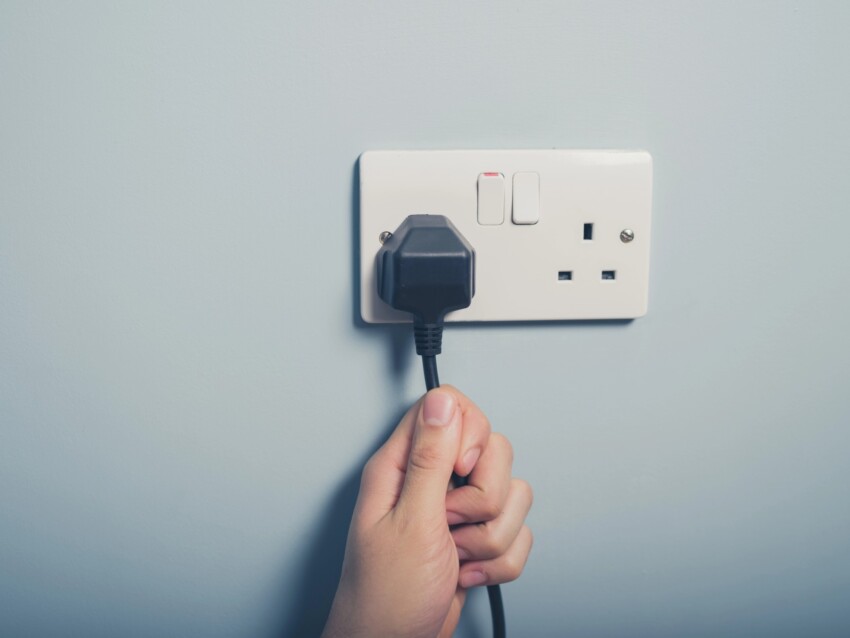
Travelling to Great Britain without the right adaptor can turn into a minor nightmare from day one: British electrical sockets are incompatible with European and UK plugs, and no hotel or hostel will automatically provide you with a converter. Whether you’re planning a trip to London, Edinburgh or anywhere else in the country, getting the right adaptor before you leave is one of those details that makes the difference between a smooth and a stressful journey.
The good news is that the transition is simpler than it seems: you don’t need a voltage converter, just a shape adaptor that allows your plug to fit into the British format. In this guide you’ll find everything you need to know: how to recognise the Type G socket, how to choose the adaptor best suited to your needs, the peculiarities of the British electrical system that often surprise European travellers, and where it’s worth buying the accessory for the best value for money.
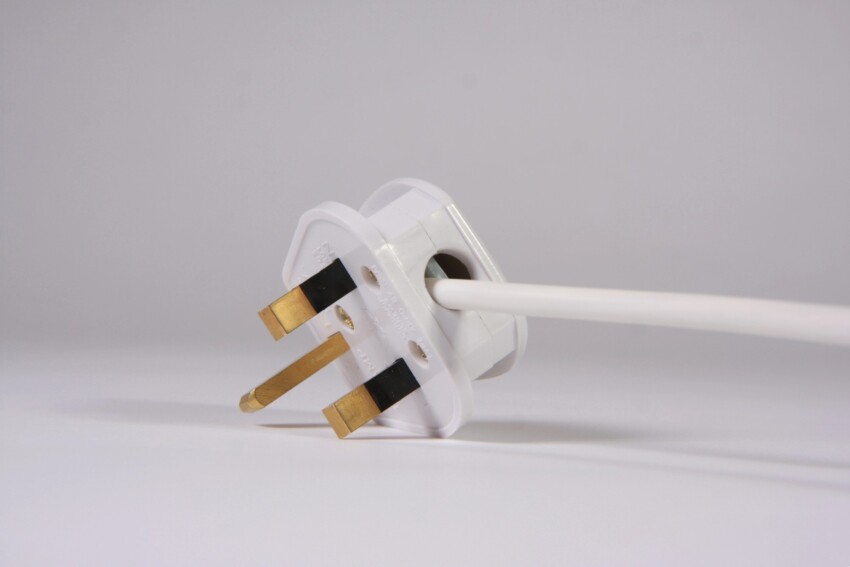
The socket in use in Great Britain is classified as Type G according to IEC standards and represents one of the most recognisable formats in the world, even if rarely seen outside Commonwealth countries. It’s distinguished by three rectangular poles arranged in a triangle: two horizontal poles at the top and a central vertical pole at the bottom. The whole thing is housed in a robust and relatively large plug, considerably more cumbersome than the European Schuko plug or the Italian three-pin inline plug.
Beyond the shape, the Type G is distinguished by an integrated safety system with no equivalent in Europe: inside the socket there are protective shutters on the upper holes that only open when the earth pole (the lower one) is inserted first. This means a child cannot insert an object into the side holes without first activating the safety mechanism: a detail that makes British sockets among the safest in the world from a physical safety standpoint.
If you’ve been wondering whether you’re looking for the right accessory, the answer is yes: any device with a CEE 7/4 (Schuko) or CEE 7/16 (European flat plug) — that is, the two most common variants in Europe — will not physically fit into British sockets. You’ll need an adaptor that converts your plug to Type G format.
It’s a legitimate question, and the answer is reassuring: no, you don’t need a voltage transformer. The British electrical system operates at 230 V / 50 Hz, exactly the same values as the European standard (including the UK). This means that all your devices designed for use in Europe — chargers, laptops, electric razors, hairdryers — will work perfectly in British sockets without any risk of damage.
The difference between the Italian and British systems is purely physical: the shape of the connectors is different, but the current flowing through them is identical. So just a few pounds for a passive adaptor will do, without needing to invest in the costly transformers needed for trips to the United States (where the voltage is 120 V) or Japan.
A small warning concerns older devices or those purchased outside the European area: always check the label on the power supply, where you’ll find indications like “Input: 100-240V, 50/60Hz”. If you find this wording, the device is universal and you won’t have any problems. If the label only indicates “220-230V”, you’re still fine for Great Britain, but be careful if you travel elsewhere.
The market offers dozens of different models at prices ranging from a couple of pounds to around twenty. The choice depends on how many devices you intend to use simultaneously, how much you travel in general and your digital habits. Here are the three most common scenarios.
If you travel light and have only one device to charge — typically a smartphone or laptop — the single passive adaptor is all you need. It’s a small block that plugs into the British socket and offers one or two European sockets as output. The cost is minimal (often less than £5 on Amazon) and the weight is negligible.
The only obvious limitation is clear: with a single adaptor you can power one device at a time, unless you already have a European multi-socket extension lead to connect. If you’re also carrying just a travel rucksack with a smartphone, laptop and possibly an action camera, you might find this solution a bit inconvenient.
It’s the type most recommended for the majority of modern travellers. These adaptors combine the European socket attachment with two or more integrated USB-A and USB-C ports, allowing you to simultaneously charge smartphones, tablets, wireless earbuds and other devices without taking up additional sockets. Many models also include fast charging (Quick Charge or USB Power Delivery), significantly reducing charging times.
The price is around £10-15 on Amazon for a good quality model. It’s important to choose products with CE certification and, ideally, with overvoltage and short-circuit protection: don’t skimp on quality for an accessory that will remain plugged in for hours in your hotel room socket.
If, in addition to Great Britain, you regularly visit destinations with different electrical standards — the United States, Australia, Asia — a universal adaptor is the smartest investment. These devices include interchangeable connectors for formats A (USA), B (USA/Canada), C/F (Europe), G (UK) and often also I (Australia/China), covering the vast majority of countries in the world.
Quality models cost between £15 and £25 and pay for themselves after the first trip, eliminating the need to buy a specific adaptor each time. Pay attention to the maximum current supported (expressed in amperes): to charge laptops with 65W or higher power supplies, make sure the adaptor can handle at least 6A.
Even those who have already visited Great Britain often tell the same story: plug inserted, charger connected, but the device won’t charge. The reason is almost always the same: British sockets have an integrated on/off switch, a small button positioned next to the socket itself. If the switch is off (in the “off” position), the socket is completely deactivated and does not supply power, even with the plug inserted correctly.
This feature is completely normal in the British electrical system and stems from safety and energy-saving reasons: you can leave appliances plugged into the socket and turn them off without needing to physically unplug them. But for a European traveller unfamiliar with this peculiarity, it can be a source of confusion. The first thing to do when you insert your adaptor is therefore to check that the switch is in the “on” position (usually the lowered position or the light on).
Another noteworthy feature concerns the plugs themselves: British Type G sockets contain an internal fuse, generally 3A or 13A, inside the plug itself (not in the adaptor). This fuse protects the individual connected device in case of overload, without tripping the entire house’s electrics. This is an additional layer of protection compared to the standard European circuit breaker, which makes the British system particularly robust from an electrical safety perspective.
If you’re used to charging your smartphone or using a hairdryer in the bathroom, prepare yourself for a surprise: standard Type G sockets are prohibited in bathrooms in Great Britain for safety reasons related to proximity to water. The BS 7671 regulations impose very strict minimum distances between electrical sockets and sources of moisture, which means that in most British bathrooms you won’t find any traditional power socket.
What you will find, almost certainly, is a Shaver Socket: a small two-hole round socket, designed exclusively for low-consumption electric razors. These sockets accept both European two-pin and American two-pin plugs, but are not suitable for high-power devices such as hairdryers, hair straighteners or laptop chargers. Attempting to use them for these purposes can damage the socket or, in the worst cases, cause a short circuit.
The practical advice is to charge smartphones and hairdryers directly in the bedroom or in the common areas of the hotel. If you absolutely need to use a hairdryer in the bathroom, ask reception: some establishments have special sockets installed at a safe distance from water, or can provide you with an extension lead approved for bathroom use.
The most convenient answer is almost always on Amazon before you leave. Prices are significantly lower than any other sales channel, the choice is vast and you can read reviews from other travellers to select the best model. By ordering a few days before departure, you have plenty of time to receive it comfortably at home without additional costs.
Airports, both British and European, regularly sell adaptors for UK sockets, but at prices that can be two or three times higher than online. At London airports, for example, a simple single adaptor can cost £12 to £20, a disproportionate sum compared to the product’s value. It’s only a practical solution in case of emergency.
Souvenir shops and newsagents in tourist areas in London, Edinburgh or other British cities often sell adaptors at slightly lower prices than airports, but quality is often disappointing: poor materials, unstable connections and lack of safety certifications. A cheap adaptor without adequate protection plugged in for hours can overheat and, in extreme cases, pose a risk. It’s not worth the saving.
If you’ve forgotten the adaptor and are already in the country, the best solution is an electronics chain or large department store like Currys, Argos or Boots: prices are reasonable, products are certified and quality is guaranteed.
Portable chargers, also known as power banks, can save you in many situations. They allow you to charge multiple times devices such as smartphones, cameras or other tools with USB interfaces. Absolutely essential to have with you at all times during a trip!
No. British Type G sockets have a completely different format from European sockets and won’t accept Schuko plugs (CEE 7/4) or the thinner European flat-pin plugs (CEE 7/16). You’ll need a physical adaptor.
No, both systems operate at 230 V / 50 Hz. You won’t need a voltage converter — just a physical adaptor to connect your plug.
Yes, it’s a very practical solution. Insert the adaptor into the British socket and connect your European extension lead: this way you can power all your devices from a single adaptor. Make sure the extension lead is CE-certified and that it doesn’t exceed the maximum power supported by the socket (usually 13A, approximately 3,000 W).
The socket most likely has its on/off switch in the “off” position. British sockets almost always have an activation button next to them: press it to “on” and power will resume normally.
Yes, provided your hairdryer has a power supply compatible with 230 V (most modern models do). Connect it using a Type G adaptor. However, remember that standard sockets are rarely found in bathrooms — you’ll need to use your hairdryer in the bedroom or another area of your accommodation.
Yes, adaptors for UK sockets are available in the shopping areas of airports, but they’re significantly more expensive than buying online. If you have time, it’s far more economical to purchase one before you leave, either on Amazon or at an electronics shop.
Technically yes, if you use a compatible two-pin flat-plug charger, but the current output is very low (usually limited to 20W) and charging will be extremely slow. Shaver Sockets are designed for low-power razors, not modern high-power devices.
No. Throughout the UK — England, Scotland, Wales and Northern Ireland — the same Type G socket is used. A single adaptor will work for your entire trip.
Check the label on the power adapter or the device itself: if it reads “Input: 100-240V, 50/60Hz”, it will work anywhere in the world. If it shows only “220-230V” or “230V”, it will still work in the UK, which operates at 230V.
The most practical option is an adaptor with integrated USB ports (at least one USB-C with Power Delivery for your laptop and one or two USB-A ports for your smartphone and other devices). This way you can avoid carrying extension leads and multiple cables, and charge everything simultaneously from a single socket. Look for models with CE certification and surge protection.
Yes, good universal adaptors include the Type G connector and work perfectly. Be mindful of quality: cheap universal adaptors without proper certification tend to overheat when used with high-power devices. Choose models from reliable brands that support at least 6A of maximum current.
 Hotel
Hotel  Budget accommodations
  Apartments
  Family Hotel
  Luxury Hotel