The St George’s Cross: The Flag of England
The History and Significance of St George's Cross, the Medieval Origins of the English Flag, the Connection with Genoa and its Role in the Union Jack.
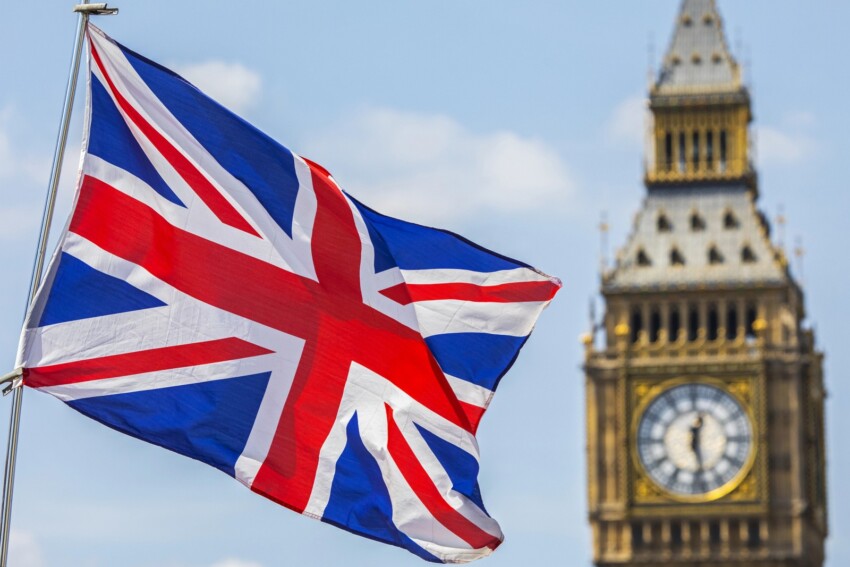
Red, white and blue interwoven in a geometry of overlapping crosses: the flag of the United Kingdom, universally known as the Union Jack, is among the most recognisable and imitated national symbols in the world. It features on t-shirts, phone cases, breakfast mugs and posters across capitals on half the globe, yet behind that seemingly simple graphic lies a political and religious history of extraordinary complexity, built over nearly four centuries through dynastic unions, parliamentary acts and heraldic compromises that are anything but straightforward.
The Union Jack is the result of overlaying three crosses — that of Saint George for England, that of Saint Andrew for Scotland and that of Saint Patrick for Northern Ireland — stitched together at three distinct moments in British history: 1606, 1707 and 1801. Wales is the only constituent nation of the United Kingdom not represented on the flag, for historical reasons dating back to the 15th century. It is an absence that still fuels political discussion and reform proposals today.
Understanding the Union Jack means understanding how the United Kingdom was formed: not as an organic whole, but as a gradual, often conflictual, aggregation of nations with their own identities, languages and histories.
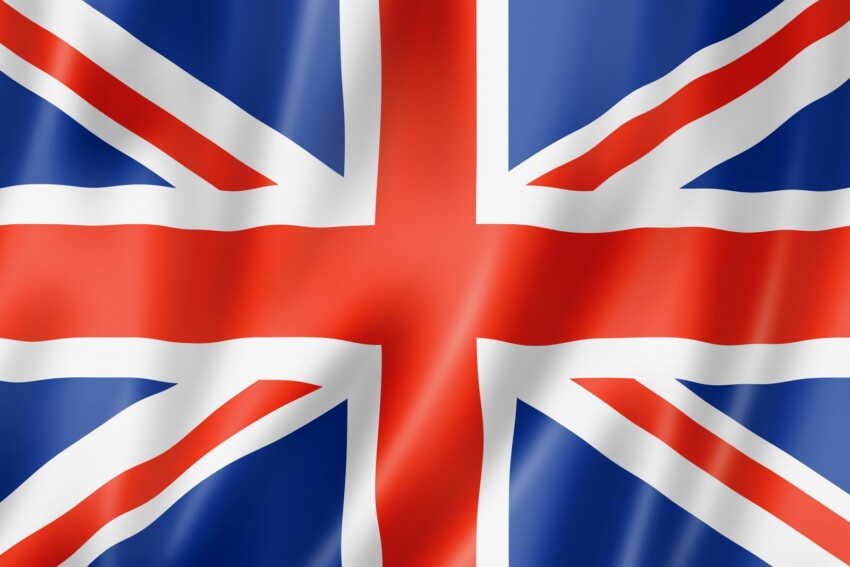
The Union Jack is composed of three distinct crosses overlaid on a blue background (Pantone 280C). The Cross of Saint George — red on white — is the supporting structure: the vertical and horizontal red cross runs across the entire flag. Overlaid upon it is the Saltire of Saint Andrew — white diagonal on blue — and finally the Cross of Saint Patrick — red diagonal on white.
The most interesting and often overlooked technical element is that the flag is not symmetrical. The diagonal red lines of Saint Patrick and white lines of Saint Andrew are not centred, but slightly offset anticlockwise. This offset — called “counterchanged” in heraldic language — was a diplomatic solution: overlaying the two diagonal crosses directly (both X-shaped) would have given the impression that one nation was subordinate to the other. The offset allows both to be visible, with the Scottish white cross partially “framing” the Irish red one, testament to the fact that Scotland was incorporated before Ireland and therefore enjoys a hierarchically superior position in heraldic order.
The practical consequence is that the Union Jack, unlike many other flags, has a correct orientation: if displayed in reverse — with the anticlockwise offset inverted — it is technically incorrect, although the difference is subtle and often unnoticed. In official British documents this distortion is specified with care.
The question of the name is more complex than it might seem. The term Union Flag is the formally correct one, used in official documents: the Merchant Shipping Act of 1995, for example, refers to the flag as “the Union Flag (commonly known as the Union Jack)”. The BBC, for its part, does not officially accept the expression Union Jack in its formal texts.
Yet Union Jack is the name by which the entire world knows it, and the British Parliament itself declared in 1908 that both denominations are acceptable as references to the national flag. The origin of the term “Jack” is debated. The most widespread explanation is the nautical one: the flag was hoisted on the jack staff, the pole at the extremity of the bow of Royal Navy warships, and small naval flags were commonly called jacks. From this naval use — the flag was initially limited to vessels — the nickname would derive.
Another theory traces the term to the Latin name of James I (Jacobus), the king who commissioned the first version of the flag in 1606. The expression “Union Jack” is documented from the early 1700s, when its use was already established in common parlance.
It all began in 1603, when James VI of Scotland inherited the English throne following the death of Queen Elizabeth I, becoming James I of England. For the first time in history, the crowns of England and Scotland were united under a single sovereign — although the two kingdoms remained formally independent, with separate parliaments and laws.
On 12 April 1606, by royal decree, James I established that the new personal union should be represented by a common flag for civilian and military vessels. The result was the overlaying of the English Cross of Saint George — red on white — with the Scottish Saltire of Saint Andrew — white diagonal on blue — using Scottish blue as the background.
The reaction was far from enthusiastic. The English protested because their traditional white background had disappeared in favour of Scottish blue. The Scots, for their part, complained because the English cross appeared overlaid on the Scottish one, suggesting symbolic subordination. No one seemed satisfied with the compromise, and use of the flag was initially limited to vessels alone, not public buildings or terrestrial uses. The two kingdoms remained formally separate until 1707, when the Act of Union united them into the Kingdom of Great Britain and the flag finally assumed full official standing.
For nearly two centuries the Union Jack remained the combination of just two crosses. The next step came on 1 January 1801, when the Act of Union between the Kingdom of Great Britain and the Kingdom of Ireland created the United Kingdom of Great Britain and Ireland. To represent the new state, it was necessary to add an Irish symbol to the flag.
The choice fell on the Cross of Saint Patrick — a red diagonal cross on white background — although the origins of this symbol are far from certain. The Cross of Saint Patrick had no tradition of use as an Irish flag: most historians believe it derives from the coat of arms of the Fitzgerald, Earls of Kildare, and not from a symbol genuinely representative of Ireland as a whole. This sparked protests, especially among Irish Catholics who did not identify with the chosen symbol.
The technical solution adopted was the aforementioned counterchanged offset: the Irish red diagonal cross was interwoven with the Scottish white one so that neither would be completely overlaid on the other, with the Scottish white cross “framing” the Irish red one in the four triangles at the sides of each arm. The result is the Union Jack as we know it today, officially adopted on 1 January 1801 and unchanged ever since.
One of the most significant historical curiosities of the Union Jack concerns Ireland. When in 1921 the southern part of Ireland gained independence, becoming the Irish Free State (later the Republic of Ireland in 1949), one would have expected a modification to the flag to reflect the fact that the new United Kingdom no longer encompassed the entire Irish island. Instead, the flag was not modified.
The official reasoning was that the Cross of Saint Patrick continued to represent Northern Ireland, the northern part of the island that remained in the United Kingdom. A justification accepted formally, but one that has always left the Irish puzzled — especially Catholic nationalists in Northern Ireland, who have never recognised themselves in the symbol. Even today the Union Jack in Northern Ireland is a politically divisive banner: for the Protestant unionist community it represents belonging to the United Kingdom, whilst for the Catholic nationalist community it is perceived as a symbol of domination.
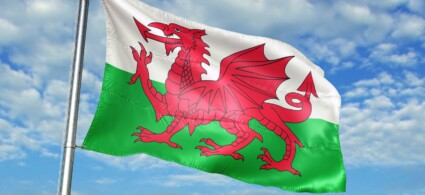
The great absentee from the Union Jack is the Welsh flag with its red dragon, Y Ddraig Goch. The reason is strictly historical: when James I designed the first Union Jack in 1606, Wales had already been incorporated into the English kingdom for over 70 years, following the Acts of Union of 1535-1542 desired by Henry VIII. Wales was therefore considered an integral part of England, represented by the Cross of Saint George, and not a separate nation to be included in the new union flag.
In recent decades, with the strengthening of Welsh national identity and the devolution of powers to the Welsh Parliament, proposals have emerged to modify the Union Jack by inserting the red dragon. In 2008, Labour MP Ian Lucas formally proposed inserting Y Ddraig Goch at the centre of the flag, but the proposal was not pursued. The debate remains open, fuelled also by growing Welsh identity pride, but any modification to the Union Jack would require political consensus that does not currently exist.
The Union Jack is the only flag in the world to have flown over all six continents simultaneously. During the period of the British Empire — which at its height, at the end of the 19th century, controlled approximately a quarter of the land surface of the planet — the flag became the most recognisable symbol of European colonial power.
Its legacy is still visible in dozens of national flags. The Union Jack appears in the upper left canton (the box in the top left) of the flags of Australia, New Zealand, Fiji and Tuvalu, as well as all Australian states (except the Northern Territory) and the Canadian provinces of Ontario, Manitoba and British Columbia. Even the Hawaii flag incorporates the Union Jack, a legacy of the privileged relations that the Hawaiian kingdom maintained with the British Empire in the 19th century.
With 20th-century decolonisation, many Commonwealth countries chose to remove the Union Jack from their own flags — as Canada did in 1965 — while others chose to retain it. In Australia and New Zealand the debate over flag change has periodically returned to the agenda, without any definitive decision being taken so far.
Few flags in the world have achieved the status of global cultural icon that the Union Jack holds. From the 1960s onwards — with the British Invasion of music by the Beatles, the Rolling Stones and dozens of other artists who conquered global markets — the British flag became a symbol of style, youth rebellion and pop identity.
In the 1990s, with the phenomenon of Cool Britannia, the Union Jack was relaunched as an icon of new British creativity: it was on Geri Halliwell’s dress of the Spice Girls, on the guitars of Noel Gallagher of Oasis, on the posters of Young British Art. Since then it has become one of the most used graphic elements in international fashion, present on clothing, accessories, design objects and souvenirs worldwide.
The United Kingdom is one of the few countries in the world without a law regulating the use of its own flag: there is no legal concept of disrespect to the Union Jack, nor instructions on how to store or handle it. This has contributed to its widespread diffusion as a decorative element, in stark contrast to countries like the United States, where flag use is regulated by a specific code.
In the post-Brexit era, the Union Jack has taken on new political significance. For supporters of leaving the European Union, it has become a symbol of recovered sovereignty and reasserted national identity. For many Scots and Welsh, by contrast, it is perceived with growing ambivalence: Scotland, which voted overwhelmingly to remain in the EU in 2016, sees in the British flag a symbol of the union that a growing part of its population would like to put into question.
The 2014 Scottish independence referendum had already reopened the debate on what would happen to the Union Jack if Scotland left the United Kingdom: the Cross of Saint Andrew would need to be removed, completely overturning the current design. The victory of unionists (55% against 45%) postponed the problem, but the debate remains open, especially after Brexit.
Despite all the tensions, the Union Jack remains one of the most powerful and recognisable national symbols in the world. It flies from the flagpole of Buckingham Palace when the sovereign is absent (replaced by the royal standard when present), dominates British military vehicles in every corner of the globe, and is the symbol under which Team GB athletes compete at the Olympics.
 Hotel
Hotel  Budget accommodations
  Apartments
  Family Hotel
  Luxury Hotel