The Royal Oak Inn, Rhandirmwyn
Rhandirmwyn - Sa20 0ny
Book now
An integral part of the United Kingdom, Wales is a predominantly mountainous and wild country, positioned on a peninsula in the south-western area of the island of Great Britain. It is renowned for its rich history and incredible wild and evocative landscapes. Welsh territory boasts beautiful natural parks and breathtaking coastal stretches that harbour numerous unspoiled and pristine beaches.
This is a land steeped in myths and legends that tell of ancient traditions, medieval castles, kings and knights, creating a fascinating cultural mosaic enriched by the strong presence of Celtic language and culture. Beyond its rich history, Wales attracts visitors from around the world with its unspoiled countryside, charming villages and excellent gastronomic heritage.
Wales is a compact destination with plenty of interesting sites to discover and a variety of activities to enjoy: from exploring the capital Cardiff to pursuing water sports, trekking in Snowdonia to underground cave tours. To fully experience Welsh traditions, it’s worth visiting the vibrant city markets and historic villages, or alternatively, you can explore various locations across the region by cycling the path that runs almost the entire length of the country.
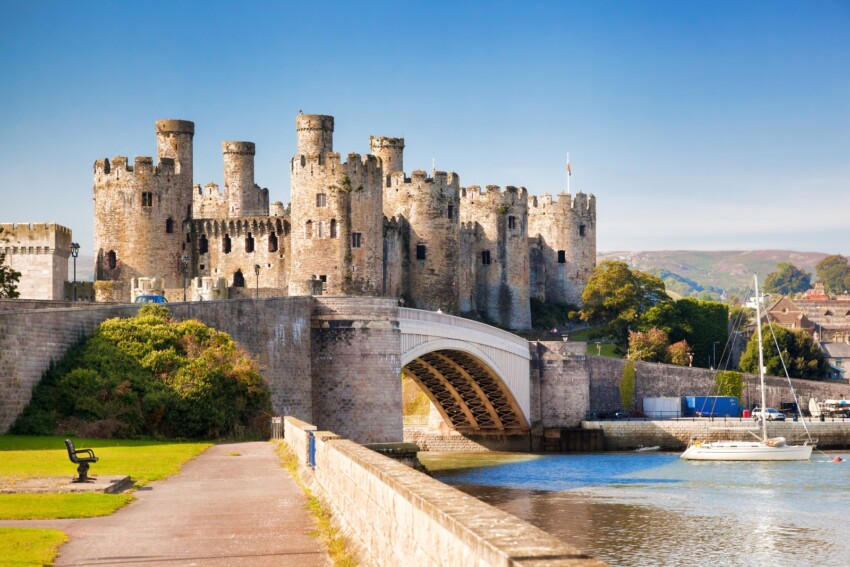
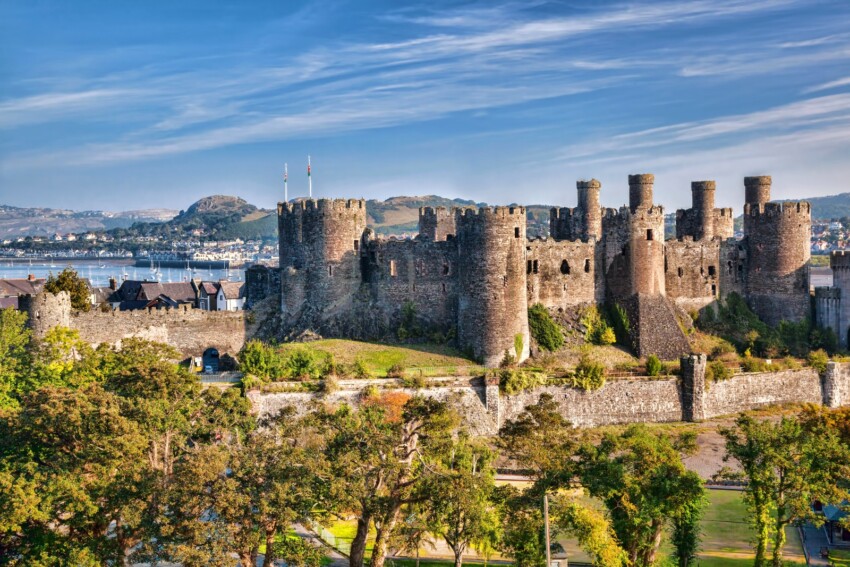
Conwy captivates visitors with its extraordinary blend of medieval castle, perfectly preserved town walls and picturesque harbour. This fortified town in North Wales, founded by Edward I in the 13th century, represents one of the finest examples of a preserved medieval walled town in Europe.
The majestic Conwy Castle, a UNESCO World Heritage Site, dominates the urban landscape with its eight massive circular towers. Built between 1283 and 1289 as part of Edward I’s chain of fortresses to control Wales, the castle rises spectacularly on a rocky promontory overlooking the Conwy river estuary. Considered among the finest examples of medieval military architecture in Europe, the fortress offers visitors breathtaking views from its towers and remarkable testimony to 13th-century military engineering.
The town walls, stretching for 1.3 kilometres with 21 towers and 3 original gateways, can be walked almost in their entirety, offering a unique perspective on the historic town.
In the heart of the historic centre, visitors can explore Plas Mawr, the most refined Elizabethan house to survive in Britain, and Aberconwy House, a rare medieval merchant’s dwelling.
The picturesque harbour adds further charm, with its fleet of fishing boats and the “Smallest House in Great Britain“, a tiny red cottage that has become one of the town’s most photographed attractions.
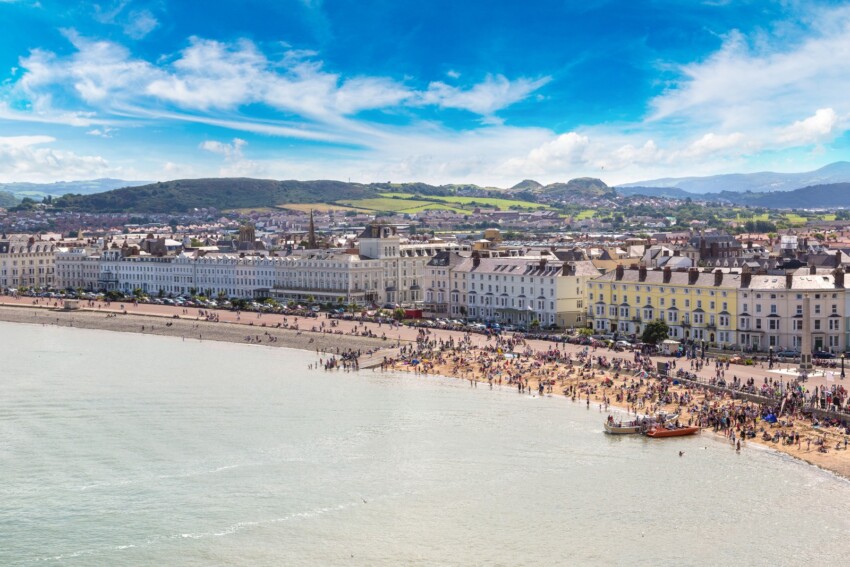
Llandudno, Wales’s largest seaside resort, stands out for its beautifully preserved Victorian charm and extraordinary setting between two limestone headlands. This elegant coastal town has maintained its historic character through magnificent Victorian and Edwardian buildings overlooking a two-kilometre-long seafront promenade.
The more imposing headland, the Great Orme, rises 207 metres above sea level and offers breathtaking panoramas over Llandudno Bay and the North Wales coast. You can reach the summit via a historic cable car from 1902, the longest of its kind in Britain, or aboard the charming Victorian tramway that climbs the steep slopes.
Llandudno’s seafront, with its pier from 1878 extending 700 metres into the Irish Sea, represents one of the finest examples of preserved Victorian seaside architecture. The North Shore beach, flanked by a promenade and elegant period hotels, offers the perfect setting for families, whilst the more secluded West Shore provides spectacular sunsets over Conwy Bay.
The town retains a refined atmosphere with its vintage shops, historic cafés and well-maintained gardens, offering visitors an authentic Victorian seaside experience combined with modern comforts and attractions.
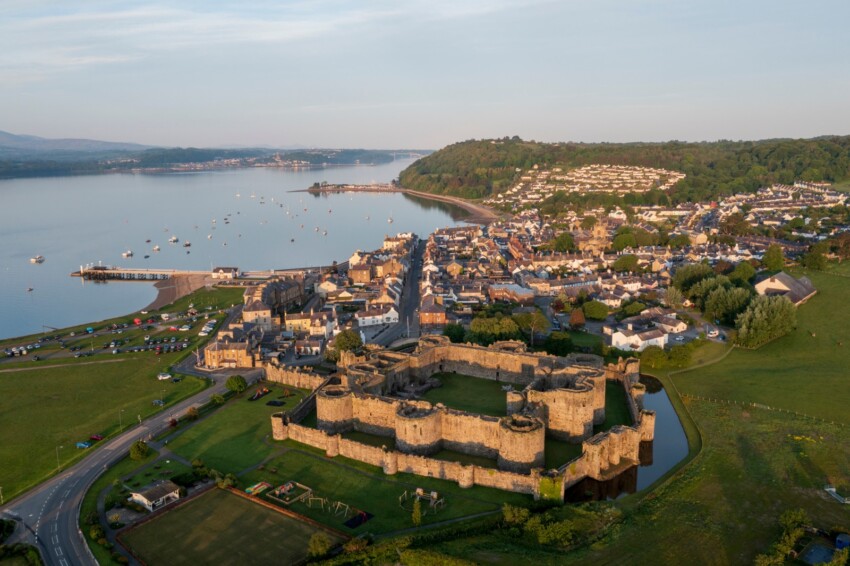
In the heart of Anglesey Island, the enchanting town of Beaumaris represents one of North Wales’s most precious gems. Its most distinctive feature is the magnificent castle, the last and technically most perfect of the castles built by Edward I in Wales, now a UNESCO World Heritage Site alongside other castles in the region. Despite remaining incomplete, Beaumaris Castle is considered the finest example of 13th-century military architecture.
The town itself enchants with its pastel-coloured Georgian houses overlooking the Menai Strait, whose crystal-clear waters separate Anglesey from the Welsh mainland. The picturesque waterfront is dotted with small boats and offers spectacular views of the Snowdonia mountains rising on the horizon.
Anglesey Island is a territory rich in history and natural beauty. Its rugged coastline features hidden sandy beaches, dramatic cliffs and a 200-kilometre coastal path. The island is also renowned for its heritage, including ancient megalithic sites and the village with the world’s longest place name: Llanfairpwllgwyngyllgogerychwyrndrobwllllantysiliogogogoch, a tourist attraction well worth a photo next to the railway station sign.
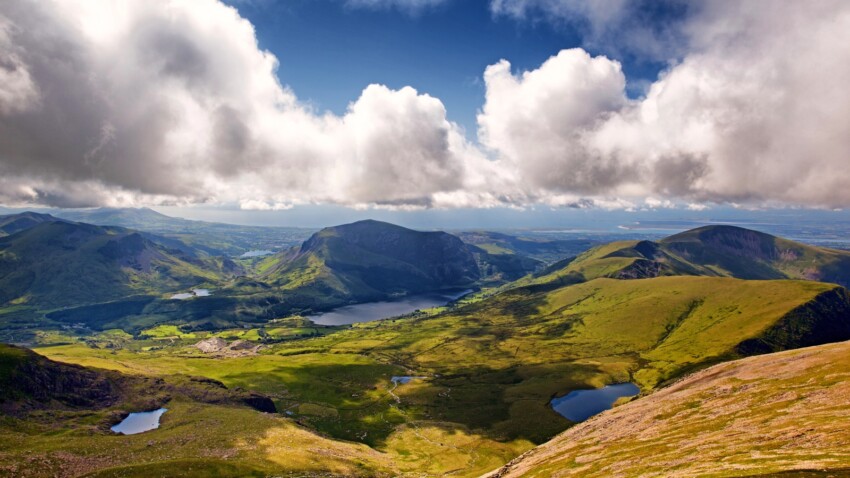
Snowdonia National Park, or Eryri in Welsh, is a true paradise for nature lovers and outdoor enthusiasts thanks to its imposing peaks, crystalline lakes, dense forests and verdant valleys. Wales’s highest mountains are found here in Snowdonia, with at least five peaks exceeding 1,000 metres, the highest being Snowdon (Yr Wyddfa) at 1,085 metres.
This protected natural area is ideal for those who enjoy activities such as hiking, climbing, mountain biking, or for those wanting to experience the thrill of one of the world’s fastest zip lines, Zip World at Penrhyn Quarry. Beyond its areas dedicated to sheep and cattle farming, Snowdonia also boasts vibrant villages worth exploring, such as Betws-y-Coed and Beddgelert.
Betws-y-Coed is a charming Victorian village surrounded by forests and waterfalls, the ideal starting point for walks and outdoor activities in the area. Beddgelert embodies the essence of authentic Wales, with its stone bridges over the Glaslyn river and the legend of the loyal dog Gelert that gave the village its name.
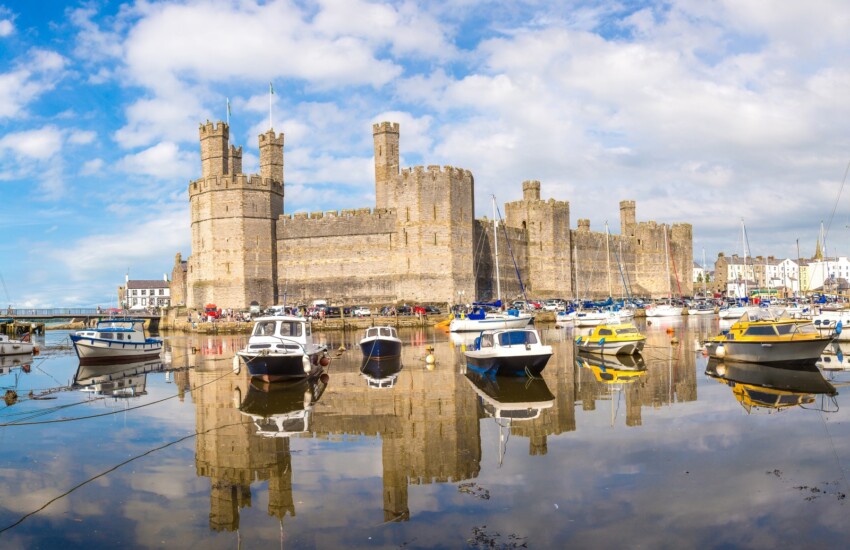
Caernarfon Castle is arguably the most impressive of the Welsh castles and has been designated a UNESCO World Heritage Site for good reason. Built in the 13th century by Edward I as a symbol of English dominance over Wales, this monumental edifice stands out for its unique architecture inspired by the walls of Constantinople.
The castle’s massive polygonal walls and distinctive towers create an unmistakable silhouette reflected in the waters of the Seiont river. Inside, visitors can explore the royal towers, walk along the battlements offering panoramic views over the town and sea, and visit the Royal Welch Fusiliers Museum, which tells the story of Wales’s oldest regiment.
Of particular interest is the Eagle Tower, the most elaborate of the castle’s towers, with its distinctive corner turrets and eagle sculptures that give it its name. The castle continues to host investiture ceremonies for the Princes of Wales, the last of which was held in 1969 for the current King Charles III.
Porthmadog6 is a delightful harbour town and starting point for heritage steam trains that climb into the Snowdonia mountains. From here depart the Ffestiniog Railway and the Welsh Highland Railway, offering some of Britain’s most scenic train journeys.
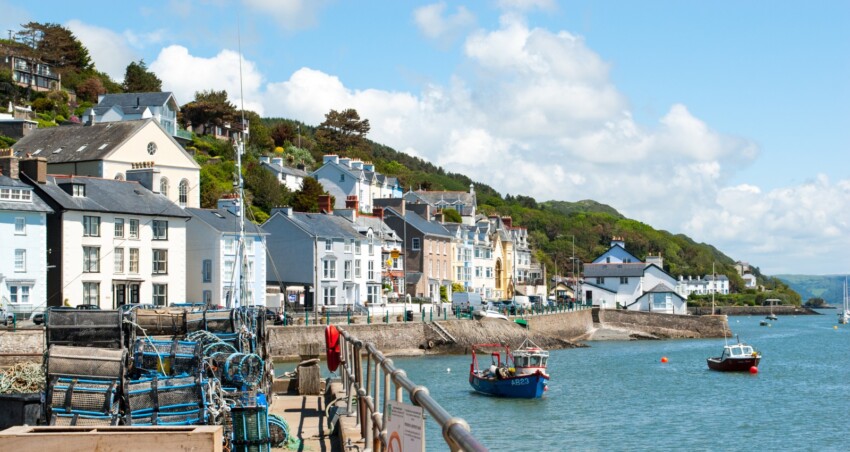
Aberdyfi7 and Barmouth8 are two of central Wales’s loveliest coastal towns. Aberdyfi charms with its golden beach stretching for miles and sand dunes, whilst Barmouth offers a perfect blend of maritime heritage, with its picturesque harbour, and traditional seaside attractions, dominated by the Victorian railway bridge crossing the estuary.
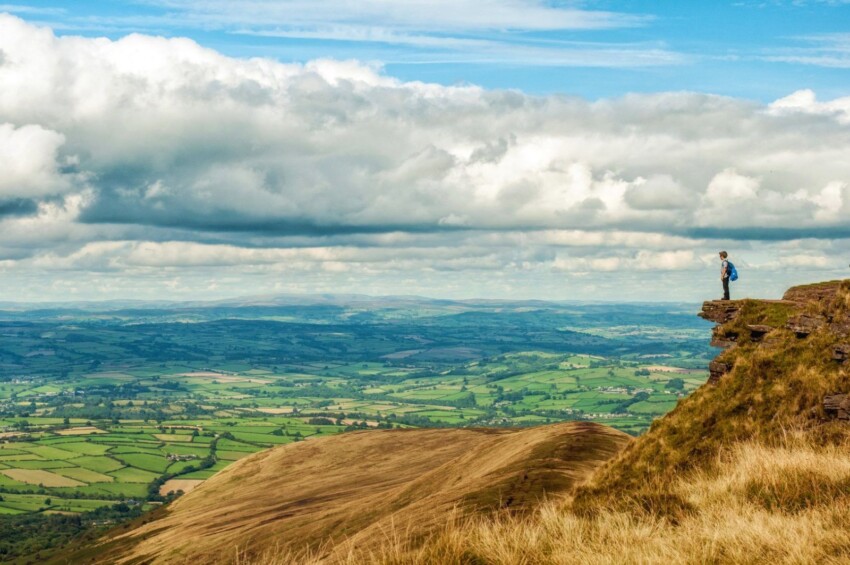
Brecon Beacons is a mountain range in South Wales situated within Brecon Beacons National Park (Parc Cenedlaethol Bannau Brycheiniog), a place of extraordinary natural beauty featuring hills, waterfalls and rich wildlife. Within the park you can pursue numerous outdoor activities such as windsurfing, sailing, canoeing and kayaking on the lakes, plus rafting on the rivers, as well as paragliding, horse riding, climbing and walking and cycling.
Exploring this area reveals diverse landscapes including windswept moorlands, wild beaches, woodlands and rocky coastlines that deliver spectacular scenery particularly at sunset. Notably, there is the Taff Trail, a cycling route crossing the Brecon Beacons starting from Cardiff, and the Beacons Way, a walking trail spanning nearly 160 kilometres. Furthermore, Brecon Beacons National Park encompasses four major limestone cave systems that can be explored via guided tours.
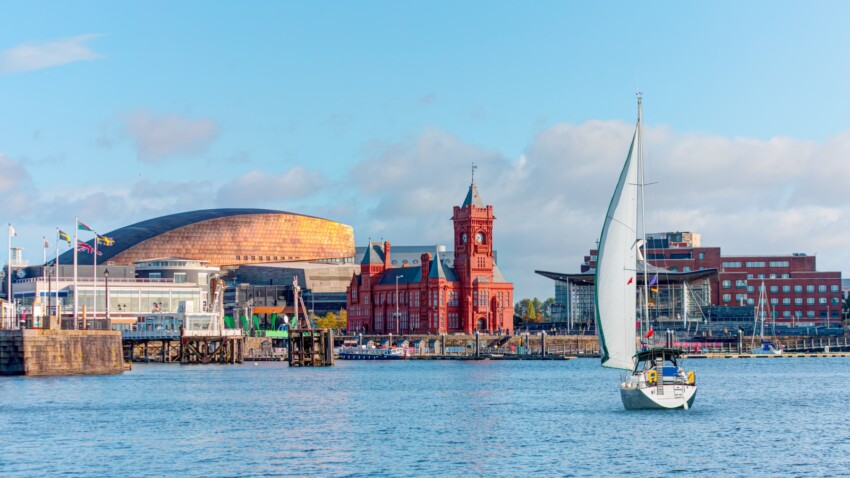
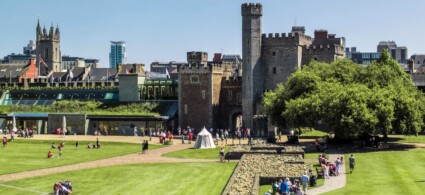
The capital with a vibrant and cosmopolitan spirit, Cardiff sits at the mouth of the Taff river in south-east Wales, near the border with England, and is the region’s most important centre, hosting the majority of cultural institutions and serving as the seat of the Welsh parliament.
The city’s symbol is undoubtedly the Castle, built in 1081 on the ruins of an old Roman fortress and restored during the Victorian era by the Bute family, who first commissioned Lancelot “Capability” Brown and later architect William Burges. Another must-see is Castell Coch (meaning “red castle” in Welsh), a medieval fortress transformed between 1875 and 1890 into Gothic-Victorian style again by architect William Burges.
Walking through the city’s streets, you can discover the City Hall, Llandaff Cathedral, built in the 12th century on the site of an earlier church, and the National Museum of Wales, which houses numerous works including Auguste Rodin’s The Kiss in bronze and Pierre-Auguste Renoir’s The Parisian Girl.
Also not to be missed is the Millennium Centre, a major arts and cultural venue, and Cardiff Market where you can purchase numerous local products. Sports enthusiasts shouldn’t miss a visit to the Millennium Stadium (Stadiwm y Mileniwm), which, built in 1999, is the UK’s largest covered rugby and football stadium, hosting not only the most important sporting events but also concerts and performances.
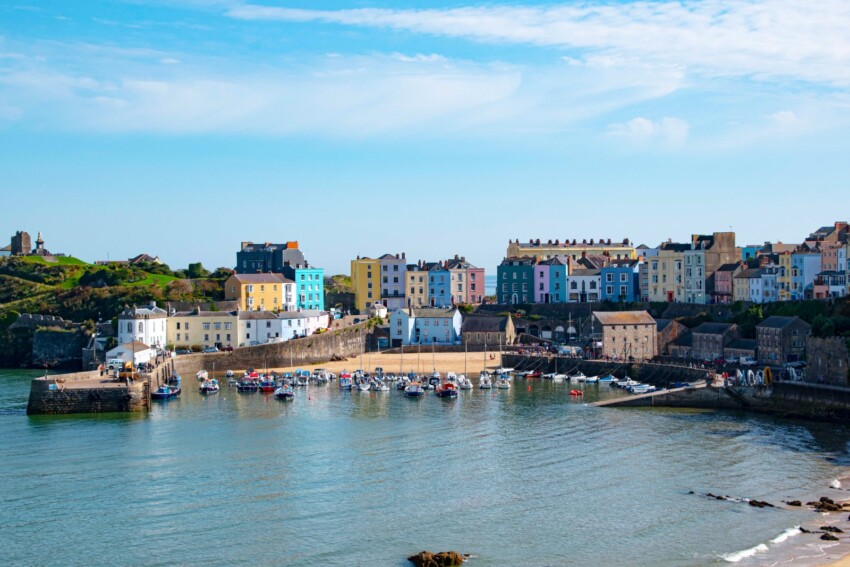
Pembrokeshire Coast National Park is the third national park in Wales after Snowdonia and Brecon Beacons and boasts one of the most captivating stretches of coastline in the whole of Britain. The main town is Pembroke, where you can visit the magnificent castle of the Tudor dynasty, birthplace of King Henry VII.
The area is famous for the Pembrokeshire Coast Path, which winds along the coast between volcanic outcrops, verdant expanses and towering limestone cliffs. Within the park are numerous beaches, mostly secluded and tranquil coves, which have repeatedly received Blue Flag and Green Coast Awards.
The region is also renowned for the evocative town of St. David’s, said to have been founded in the 6th century by David of Menevia, considered the patron saint of Wales. In his honour, the Cathedral of St. David was built here in the 12th century, one of the most important and ancient churches in all of Wales.
The most beautiful villages not to miss are Tenby, Broad Haven, Solva and Porthgain.
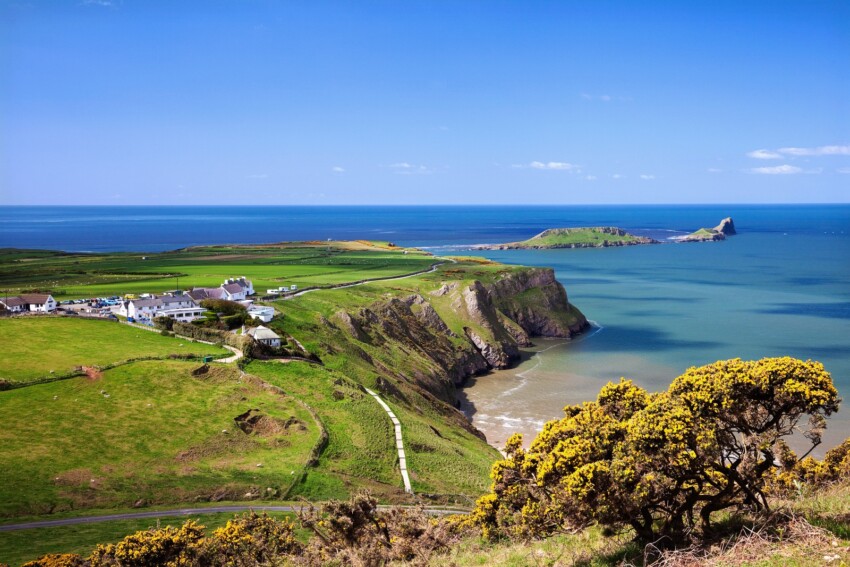
Swansea, Wales’s second-largest city, presents itself as a vibrant urban centre that perfectly blends its industrial heritage with modern attractions and a splendid coastal location. The city, birthplace of poet Dylan Thomas, overlooks the vast sweep of Swansea Bay with a waterfront promenade stretching for miles, offering a perfect introduction to South Wales’s coastal landscape.
West of the city stretches the spectacular Gower Peninsula, the first area in Britain to be designated an AONB (Area of Outstanding Natural Beauty) in 1956. This 30-kilometre promontory encompasses some of the UK’s most evocative coastal landscapes, characterised by secluded bays, dramatic cliffs and golden beaches that seem straight from a postcard.
Rhossili Bay beach, considered one of Europe’s finest, stretches for three miles with its golden sand, dominated by the distinctive silhouette of Worm’s Head. Other gems of the peninsula include picturesque Three Cliffs Bay, with its characteristic profile of three limestone peaks, and tranquil Oxwich Bay, perfect for families.
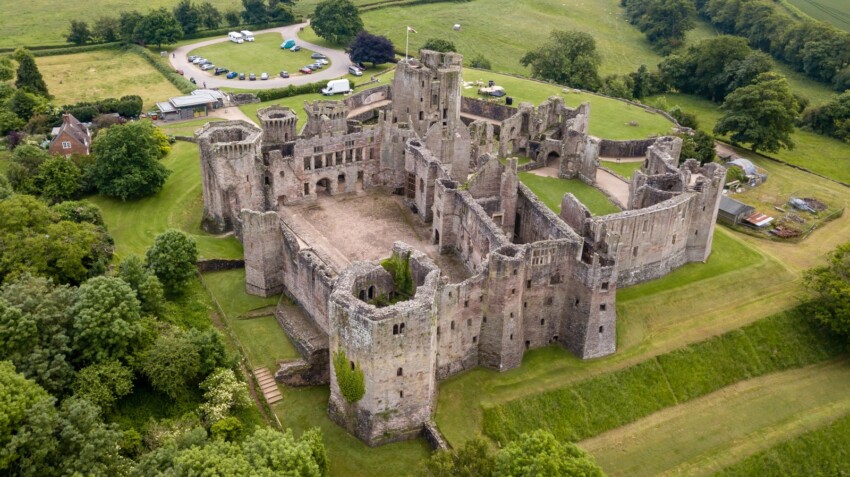
Raglan Castle represents one of the most impressive examples of late-medieval fortified architecture in Wales. Built chiefly between the 15th and 16th centuries, this magnificent castle-fortress combines defensive elements with the luxury of a Renaissance residence. Its most distinctive feature is the Great Tower, a hexagonal keep surrounded by a moat, which was once considered one of Wales’s most sumptuous buildings.
Though partially demolished during the English Civil War, its majestic ruins continue to impress visitors with their elaborate stone carvings, expansive Gothic windows and imposing fireplaces bearing witness to the ancient grandeur of this noble residence. The castle also features a well-preserved medieval kitchen and an evocative courtyard fountain recalling past splendour.
In the following map you can see the location of the main places of interest mentioned in this article.
Wales can be visited year-round, but the summer months from June to September offer the mildest temperatures and longest daylight hours, making them ideal for exploring its natural beauty and Welsh towns. May and June in particular are the sunniest months, with daytime temperatures around 22-24°C, though evenings can dip to 10-12°C.
The wettest months are typically January, October, November and December, though rain in Britain shouldn’t be a deterrent – sudden showers are common. In winter, the skies are often grey, daylight is limited, and some tourist attractions close from mid-October and reopen at Easter. Additionally, some mountain passes may close due to heavy snowfall.

Wales is easily accessible from various European and UK locations via several airports. For the south, Cardiff Airport is the most convenient option, whether you’re visiting the city or the surrounding area. Alternatively, consider Bristol Airport (BRS), just 1 hour 45 minutes from Cardiff.
For north Wales, Manchester (MAN) and Liverpool (LPL) airports are most convenient, with regular rail connections to major cities in north Wales.
Those travelling by bus can use National Express, the most extensive national network with frequent connections between most British towns, or Megabus services, which link London with Cardiff at very competitive prices.
Most major Welsh cities are connected to England via rail – for example, the train journey from London to Cardiff takes less than two hours. As for ferries, these depart from Holyhead, Pembroke, Fishguard and Swansea, offering connections to Ireland, with frequencies and timetables varying by season.
The most recommended way to explore Wales, however, is to hire a rental car, which allows you to roam freely and discover some of the most scenic routes, stopping whenever you like to take photographs or admire the sunset. By car, for instance, Cardiff is approximately three hours’ drive from London, or just over two hours from Birmingham.
North Wales is the ideal choice for those wanting to explore Snowdonia and medieval castles. The towns of Caernarfon and Conwy offer historic accommodation with castle views, whilst villages within the national park are perfect for those seeking a nature-immersed experience.
The Pembrokeshire coast is perfect for families and sea lovers. Coastal towns such as Tenby and St Davids offer a wide range of family-friendly B&Bs and hotels with ocean views, ideal for exploring beaches and coastal paths.
Cardiff and its surroundings represent the best option for combining urban culture with excursions to the Brecon Beacons. The capital offers accommodation for every budget, from boutique hotels in the historic centre to modern apartments in the bay area.
It may seem odd, but travelling to and from Wales is easier than getting around within Wales itself. The only motorway crossing the entire country is the M4, just over 300 km long, connecting south Wales with Bristol and London; supplemented by an extensive network of roads, particularly along the north and south coasts. Rail connections are an alternative, with lines running mainly along coastal areas, operated largely by Transport for Wales and Avanti West Coast.
We recommend hiring a car from Cardiff or one of the English airports to explore Wales with complete independence and maximise your time. This is the only way to see remote villages and areas.
Located in the western part of Great Britain, Wales borders England to the east, the Irish Sea to the north and west, and the Bristol Channel to the south.









 Hotel
Hotel  Budget accommodations
  Apartments
  Family Hotel
  Luxury Hotel